Market outlook
Stable Outlook 6/10
Demand for Adrian Peterson remains supported by his elite career profile and Hall of Fame-era collectability, but non-autograph serial-numbered cards generally move with broader football card market sentiment rather than driving it.
Next months. Prices should remain stable with occasional spikes if a high-grade example appears or if competitive bidding is triggered by a strong collector base.
Long term. Over 1-3 years, value should hold steady to gradually appreciate, with strongest upside in gem mint grades and well-centered copies.
History
Adrian Peterson is a former NFL running back who entered the league in 2007 as one of the most highly touted prospects of his era, after a dominant college career at Oklahoma. He quickly became one of the defining players of the late-2000s and 2010s, known for elite rushing production, physical running style, and a long career that included multiple Pro Bowls and major league honors.
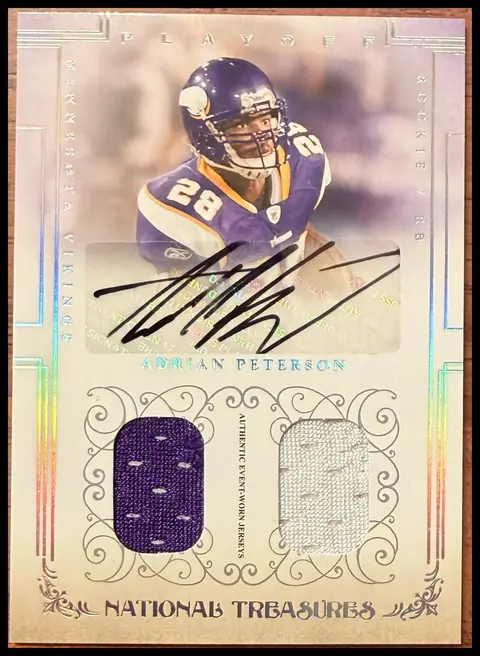
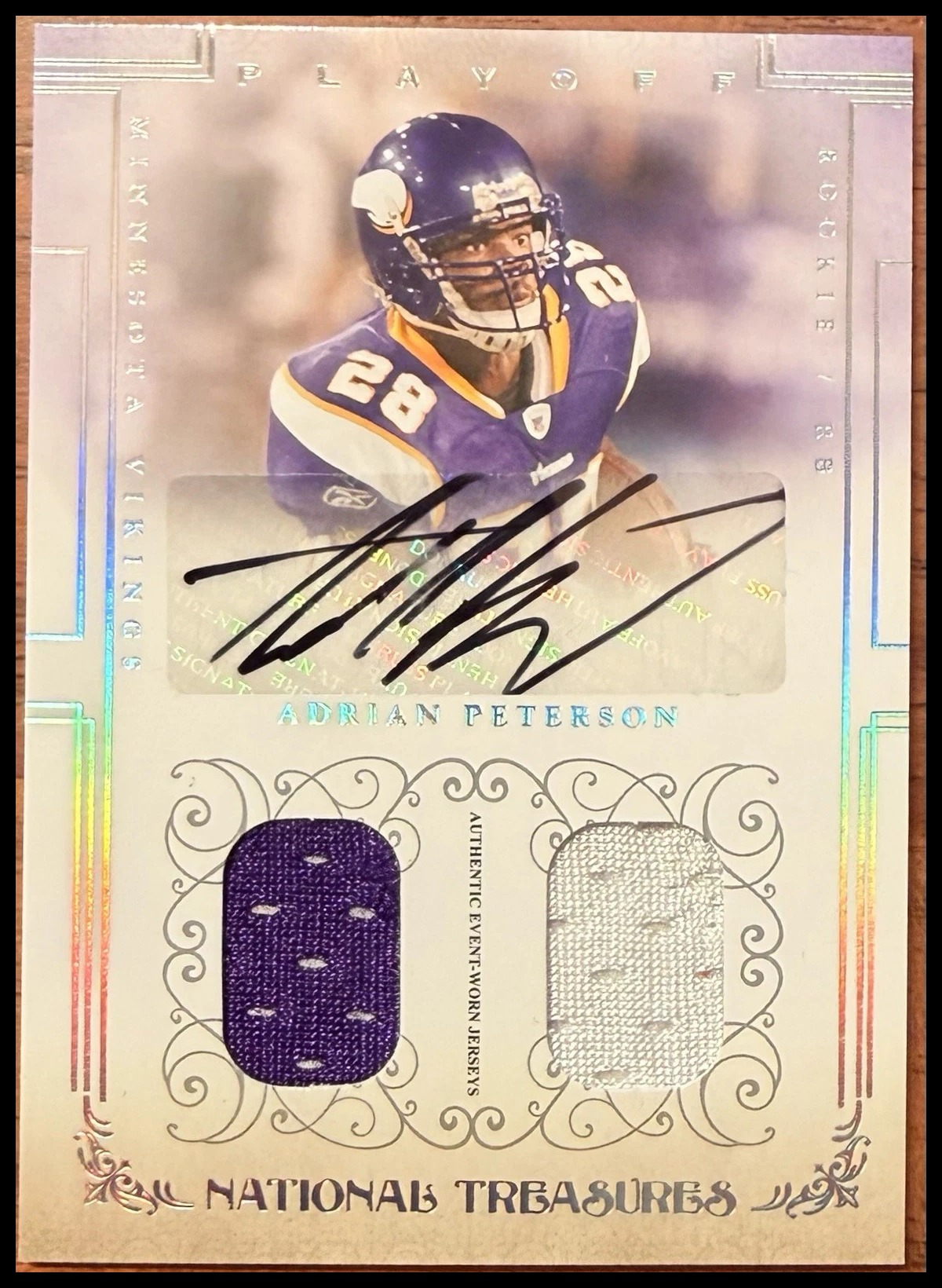
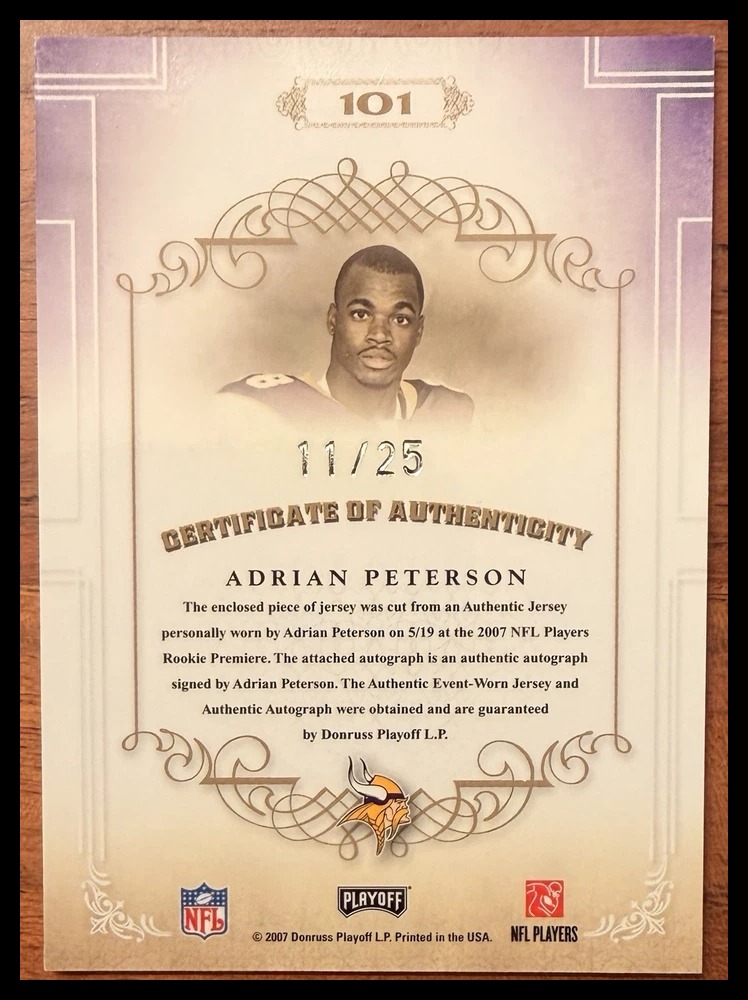
This card was first released in 2007 as part of the Donruss Playoff football product line, issued by Playoff/Donruss in hobby packs sold through the 2007 football card market.
- A serial-numbered /25 card is inherently short-printed and significantly scarcer than base and most insert cards.
- Adrian Peterson rookie-year memorabilia/parallel cards are generally the most sought-after Peterson cards from 2007 products.
- Market listings and sales data for comparable 2007 Playoff/Donruss Peterson low-numbered cards show collector interest remains active, especially for premium parallels and autographs.
Rarity and print run
- Tier
- Rare
- Print run
- Low
- First printed in
- 2007 Donruss Playoff
- Demand
- Medium
- Supply
- Scarce
- Serial-numbered to only 25 copies
- Rookie-year Adrian Peterson demand
- Likely limited pack insertion and relatively low survival in high grade
Collector notes
Condition. Check for sharp corners, clean edges, centered print, and surface scratches or dimples, which are common on glossy serial-numbered football cards. For memorabilia versions, inspect patch window edges, loose fabric, fraying, and any lifting around the swatch area. Since the card is /25, even minor wear can have an outsized effect on value.
Storage. Store in a penny sleeve and rigid top loader or graded slab, and keep it in a dry, temperature-stable environment. Use an outer card sleeve or team bag for added protection, and avoid frequent handling to preserve corners and surface gloss.
Authenticity. Verify the serial number format, card stock, foil stamping, and print quality against known authentic examples. For patch or memorabilia variants, compare stitching, swatch shape, and cut-out consistency; counterfeit or altered cards often show poor print registration, fuzzy text, or inconsistent numbering. Third-party grading or authentication is especially useful for low-numbered Peterson cards.
Sources: sportscardspro.com, steinersports.com, facebook.com, comc.com, cardladder.com