Market outlook
Rising Outlook 8/10
Demand for Ohtani's earliest Japanese cards has remained strong because they represent his pre-MLB origin story and are central to his collecting market. The supply of top-condition copies is limited by handling wear and grading attrition, which supports prices. [1][4][6]
Next months. Expect stable-to-firmer prices, with graded and high-grade copies outperforming raw copies. [2]
Long term. The card should remain a desirable Ohtani staple, with strong upside if collector interest in Japanese issues continues to expand. [1][4][6]
History
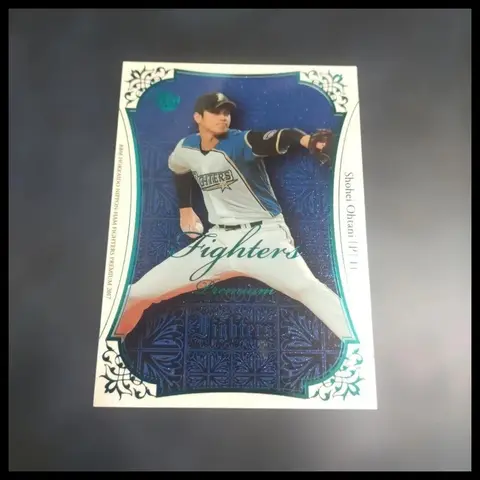
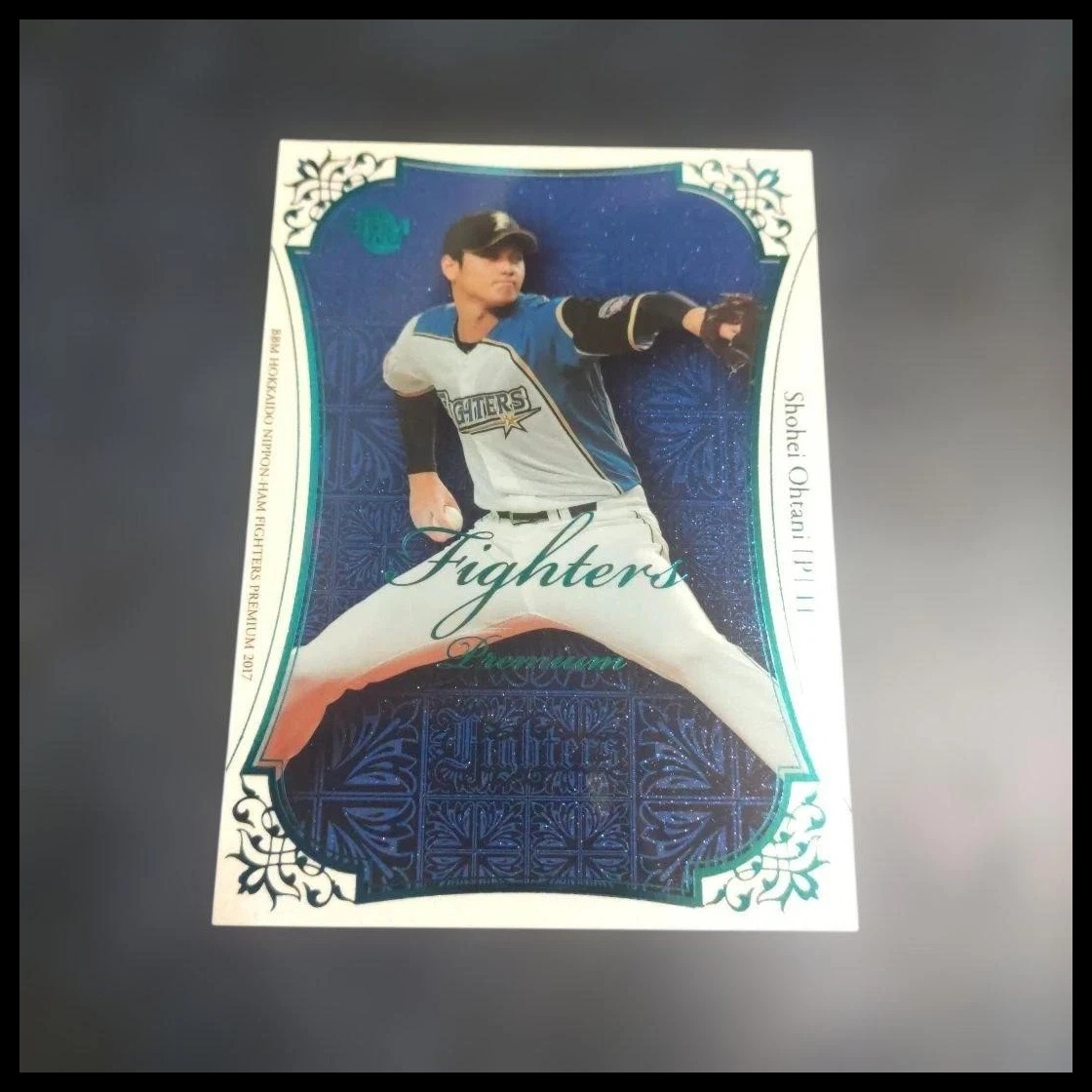
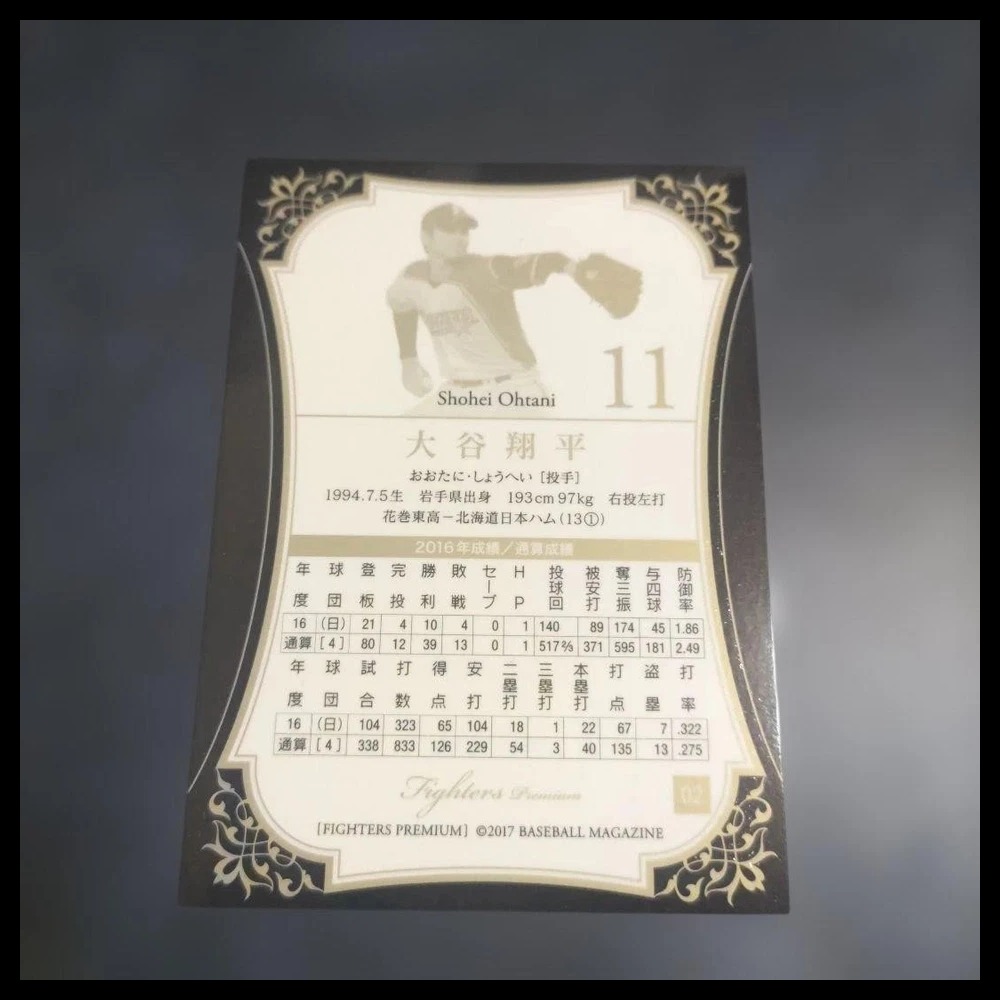
Shohei Ohtani is a Japanese professional baseball star from Oshu, Iwate, who became famous as an elite two-way player, excelling as both a pitcher and hitter. He rose to prominence in Nippon Professional Baseball with the Hokkaido Nippon-Ham Fighters before becoming an international superstar in Major League Baseball. Among Japanese-issued Ohtani cards, his BBM 1st Version rookie-era issues are especially significant because they capture him during his NPB breakthrough and are widely viewed as foundational pre-MLB collectibles. [1][4][6]
This card belongs to the 2017 BBM 1st Version Japanese baseball issue and would first have been released in Japan as part of that 2017 BBM set. The exact day of release is not provided in the supplied sources, but the card is clearly identified by collectors as a 2017 BBM 1st Version Japanese rookie-era Ohtani card. [4][6]
- BBM 1st Version is one of the most sought-after Japanese Ohtani rookie-era sets and is commonly nicknamed the 'Red Wing' by collectors because of its design. [6]
- Japanese Ohtani cards from his NPB period have drawn major collector attention, including record-setting sales for pre-MLB Ohtani cards. [1][6]
- 2017 BBM Infinity Ohtani cards trade at accessible prices compared with top-tier autographs, but premium Japanese rookie-era Ohtani issues remain a core collecting category. [2][4]
Rarity and print run
- Tier
- Rare
- Print run
- High
- First printed in
- 2017 BBM 1st Version
- Demand
- Very High
- Supply
- Medium
- It is an early Japanese Ohtani issue tied to his NPB era, which increases collector demand.
- High-grade examples are scarcer than raw copies because Japanese paper and glossy stock can show wear.
- Not all BBM printings are equally scarce, so rarity is driven more by player demand and grade than by known serial limitation.
Collector notes
Condition. Check centering, sharp corners, clean edges, and surface gloss, because Japanese paper-stock cards often show whitening or edge wear quickly. Also inspect for print lines, faint scratches, and corner dings from insertion into sleeves or albums; premium Japanese issues can have strong condition sensitivity even when ungraded. [4][6]
Storage. Store the card in a soft penny sleeve, then a semi-rigid holder or top loader, and keep it in a dry, low-humidity environment away from sunlight. For higher-value copies, use archival-safe materials and avoid repeated handling because Japanese stock and glossy surfaces can show micro-scratches. [4][6]
Authenticity. Verify the exact BBM 1st Version design, card number, Japanese text, and paper finish against known authentic examples. Be cautious with altered images, rebacked cards, or mislabeled reprints; for premium Ohtani Japanese cards, third-party grading and matching the exact set checklist are the best authentication checks. [4][6]
Sources: sports.yahoo.com, sportscardspro.com, youtube.com, beckett.com, reddit.com