Market outlook
Rising Outlook 7/10
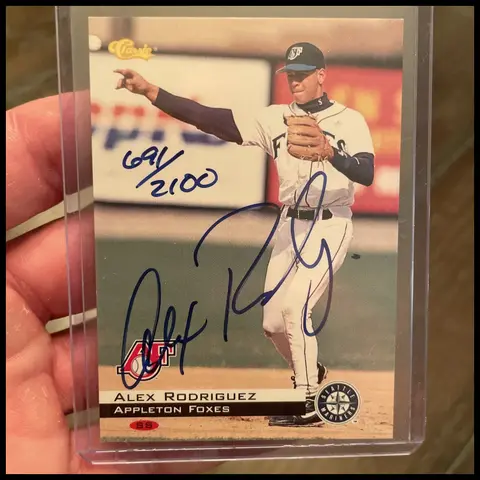
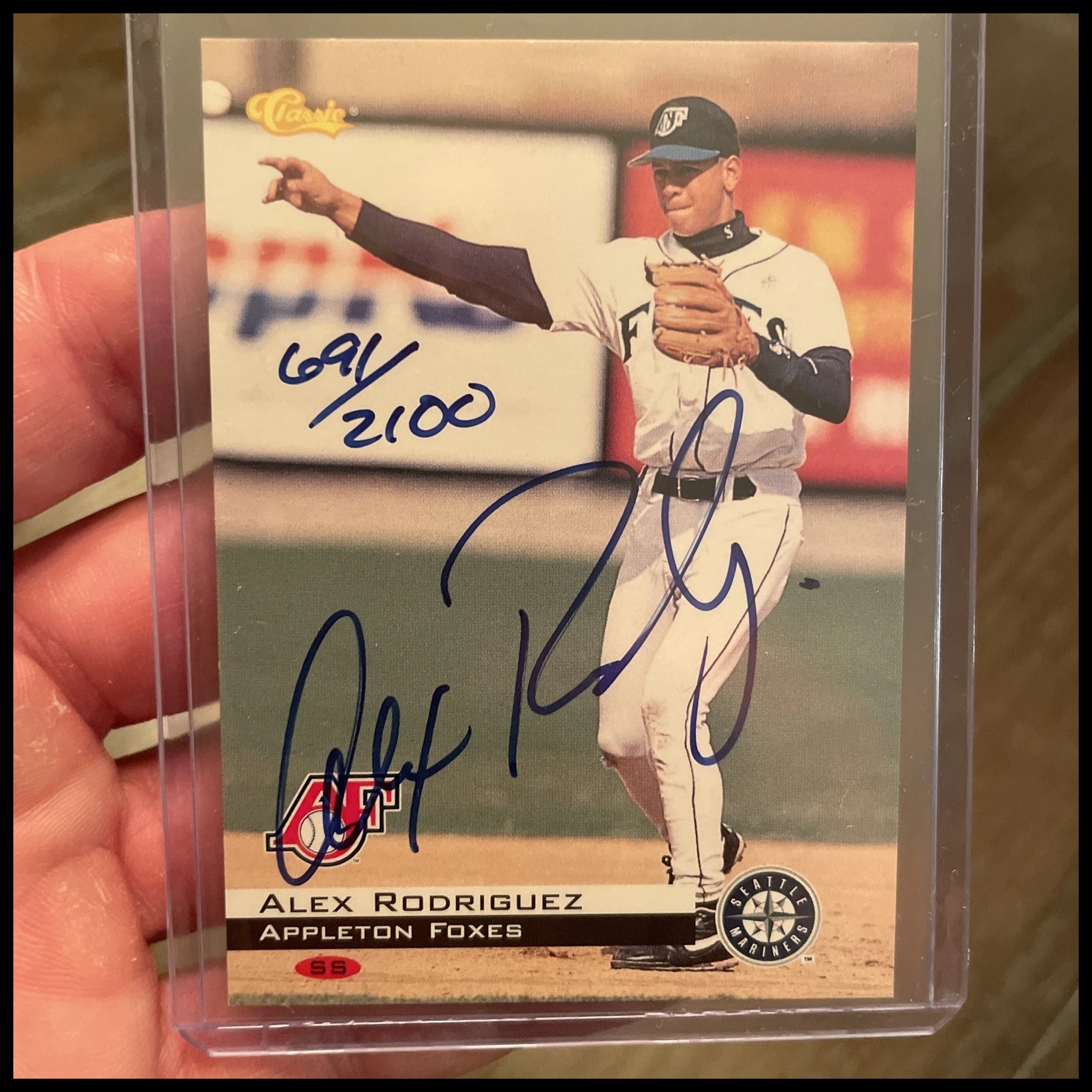
Early numbered Rodriguez cards generally benefit from long-term Hall-of-Fame-era collector demand, while finite supply limits downside. Interest is supported by the card's pre-rookie timing and limited print count.[1][3]
Next months. Likely stable to slightly rising, with the strongest gains concentrated in high-grade or authenticated examples.
Long term. Likely gradual appreciation over 1-3 years, especially if collector interest in early 1990s serial-numbered pre-rookie cards remains strong.
History
Alex Rodriguez is one of the most significant baseball players of the modern era, rising from elite high-school prospect to top minor-league hobby name before becoming a 14-time MLB All-Star and one of the most statistically accomplished shortstops in history. In card collecting, his early 1994 minor league issues are important because they capture him before his major-league debut and include some of his earliest widely collected cards and promos.[3][7]
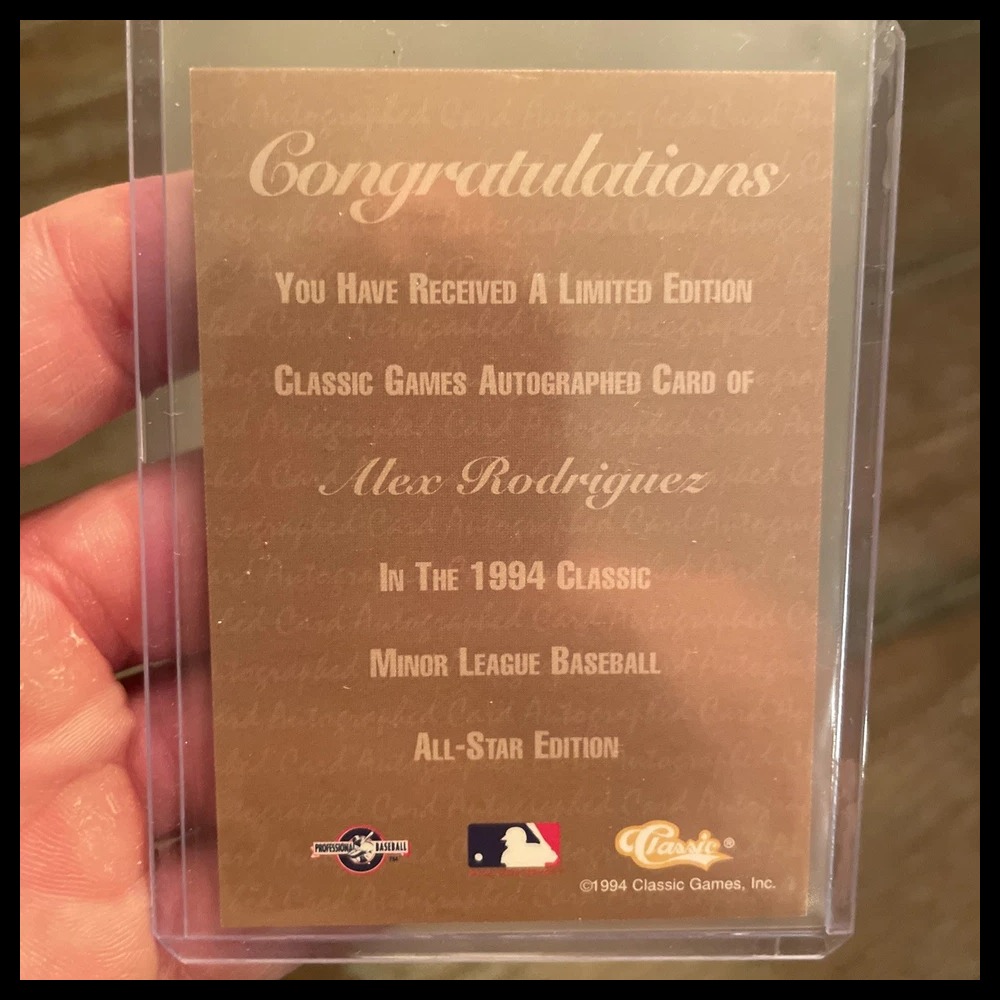
This card was first released in 1994 as part of the 1994 Classic Minor League All Star Edition baseball product, a minor-league themed release that included a 200-card base set and additional inserts.[2][3]
- The card is serial-numbered to 2,100 copies, making it a legitimately limited production issue.[1]
- BaseballCardPedia identifies a 1994 Classic Alex Rodriguez promo card in the Classic minor league line, showing that Rodriguez was used prominently in the brand's pre-rookie marketing.[3][7]
- The 1994 Classic Minor League All Star Edition product is known for its 200-card base set and insert content, and it was part of a broader 1994 Classic release that produced a relatively small number of serialized boxes compared with mainstream baseball products of the era.[2][3]
Rarity and print run
- Tier
- Rare
- Print run
- Medium
- First printed in
- 1994 Classic Minor League All Star Edition
- Demand
- High
- Supply
- Scarce
- Serial-numbered to 2,100 copies
- Early-career Alex Rodriguez issue from 1994
- Collector demand tied to a Hall-of-Fame-caliber player
- Condition-sensitive market with fewer high-grade survivors than total print run suggests
Collector notes
Condition. Check centering carefully, as 1990s minor league cards often show uneven borders. Also inspect corners for whitening, edge wear, surface scratches, print defects, and any loss of gloss. Because this is serial-numbered, the numbering stamp should be crisp and consistent, with no signs of alteration or over-inking.
Storage. Store in a penny sleeve and rigid top loader or semi-rigid holder, and keep the card away from moisture, heat, and UV light. For a numbered limited-edition card, a one-touch magnetic holder or graded slab is often preferred for long-term protection and resale confidence.
Authenticity. Verify that the serial number reads cleanly and matches the expected limited-edition format. Watch for reprinted or altered cards with added numbering, fake signatures if applicable to autograph versions, and tampered surfaces around the stamp area. Comparison against known authentic examples is important because 1990s insert-style and limited-run cards can be counterfeited with simple digital reproduction.
Sources: comc.com, beckett.com, baseballcardpedia.com, etsy.com, sportscardspro.com