Market outlook
Rising Outlook 8/10
Vintage Clemente cards remain supported by Hall of Fame status, historic significance, and limited high-grade population; elite copies continue to set strong auction benchmarks.
Next months. Stable to mildly rising, especially for graded 7 and above if strong auction comps continue.
Long term. Likely to trend upward over 1-3 years, with the strongest appreciation expected in high-grade certified examples and eye-appeal premium copies.
History
Roberto Clemente (1934–1972) was a Hall of Fame right fielder for the Pittsburgh Pirates, celebrated for elite hitting, a famously strong throwing arm, and major humanitarian work; he became one of baseball’s most respected figures and a cultural icon, especially in Latin American baseball history.
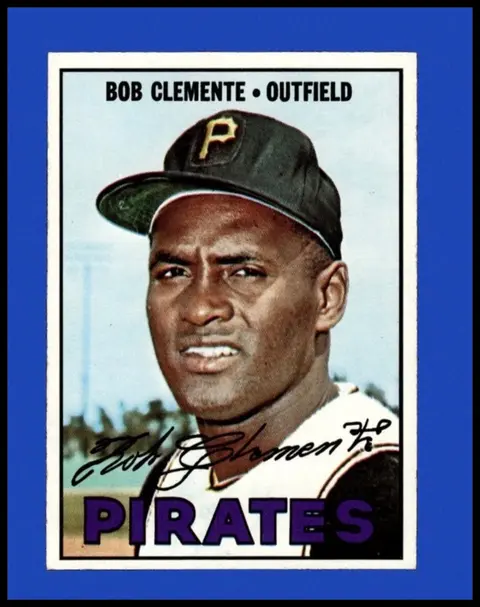
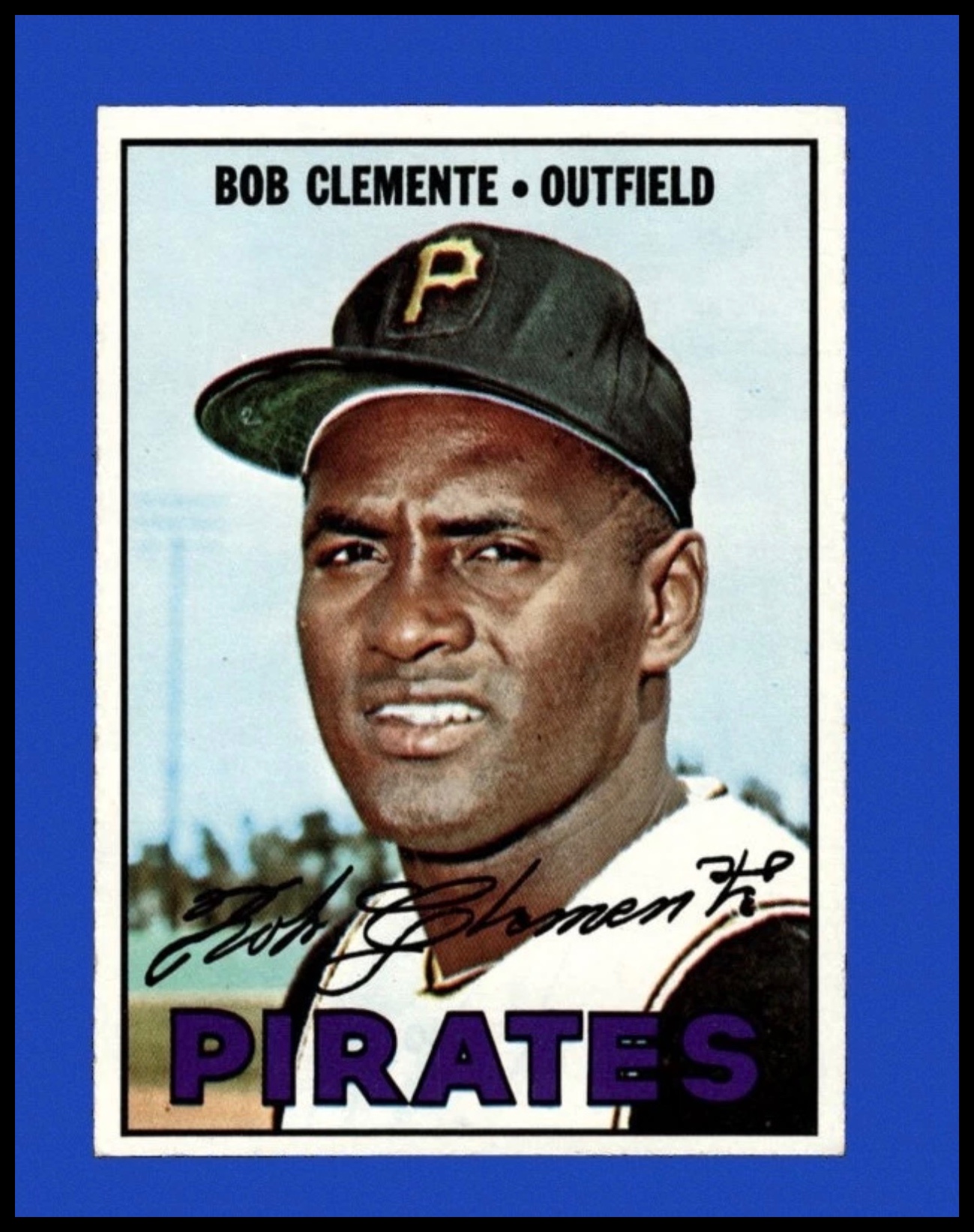
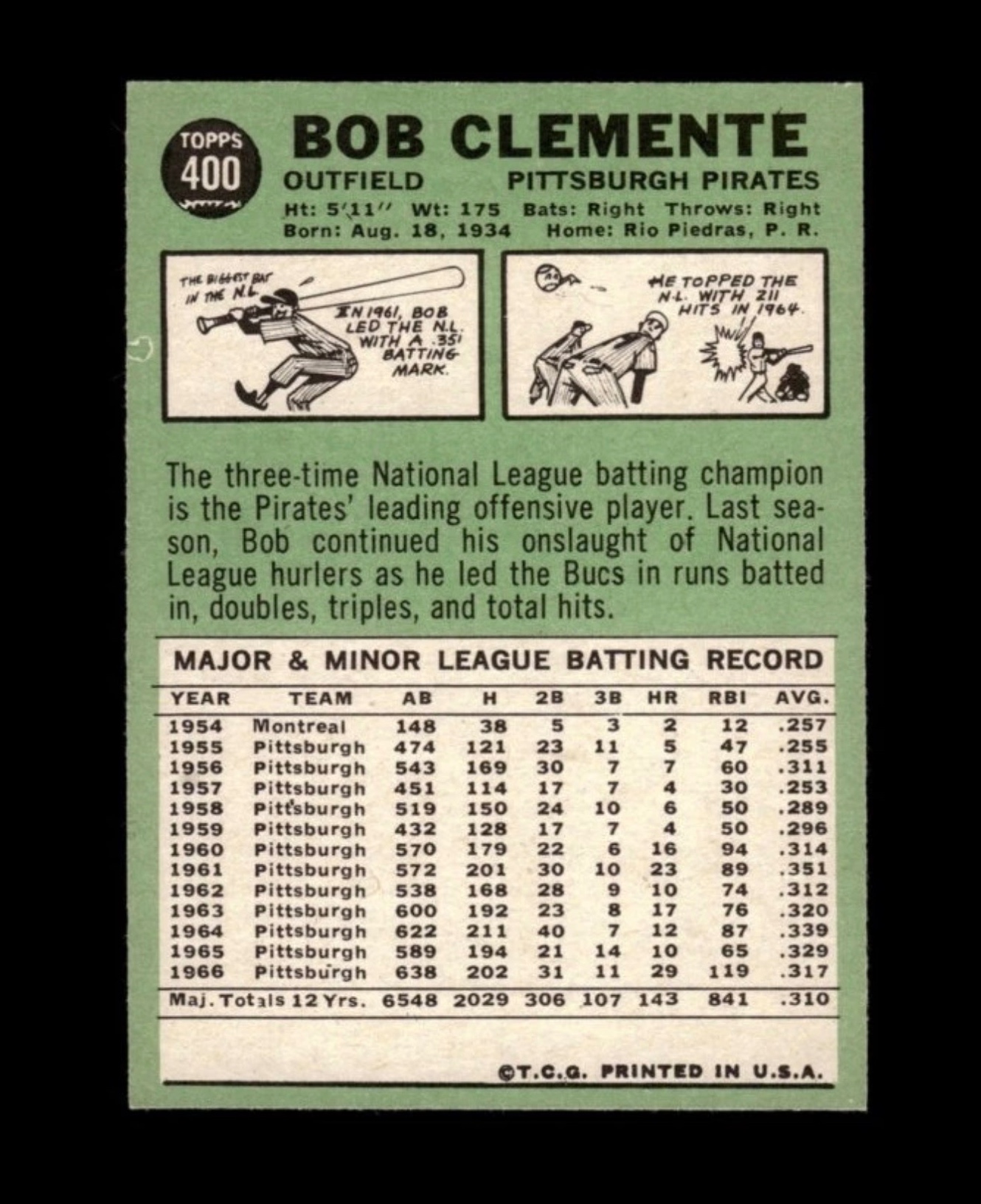
First issued in the 1967 Topps Baseball set in the United States as card #400, released by Topps during the 1967 baseball card season.
- The card is commonly cataloged as 'Bob Clemente' on the front, reflecting Topps' use of Roberto Clemente's nickname.
- 1967 is considered one of Clemente’s key-era cards because it comes from the year he won the National League batting title with a .357 average.
- High-grade examples are strongly value-driven by centering and corner quality, with graded 10 copies extremely rare and historically commanding six-figure prices.
Rarity and print run
- Tier
- Common
- Print run
- Very High
- First printed in
- 1967 Topps Baseball
- Demand
- Very High
- Supply
- Medium
- It is a base-card issue from a mass-produced flagship Topps set, so raw supply is substantial.
- Scarcity rises sharply in high grade because the card is often found off-center or with corner wear.
- graded 10 examples are exceptionally rare despite common-set origins.
Collector notes
Condition. Check centering first, then corners, edges, surface gloss, and print registration; common flaws include off-centering, corner wear, light surface scratches, wax/stain marks, and color loss on the dark borders.
Storage. Store in a penny sleeve plus rigid top loader or semi-rigid holder, keep in a cool dry environment, avoid sunlight and humidity, and use archival pages or boxes for long-term storage.
Authenticity. 1967 Topps cards should show period-correct paper stock, aging, printing texture, and vintage Topps design details; beware overly bright paper, modern gloss, incorrect font/layout, and suspiciously sharp edges on an otherwise old card. Graded encapsulation from a reputable service is the safest authentication route.
Sources: sportscardspro.com, deanscards.com, sportscardinvestor.com, sports.ha.com, psacard.com