Market outlook
Stable Outlook 7/10
Modern serial-numbered football cards usually move with player performance, team success, and scarcity. Maeda’s profile is strong enough to support demand, but the card category is still relatively new and supply is likely sufficient that prices may fluctuate more than surge unless he has a major season or key international tournament moment.
Next months. Likely stable to slightly stronger pricing for well-centered, graded copies if Maeda remains productive and visible in Celtic matches.
Long term. Moderate appreciation potential for low-serial, autograph, and high-grade copies; ordinary numbered copies may remain collectible but not highly liquid.
History
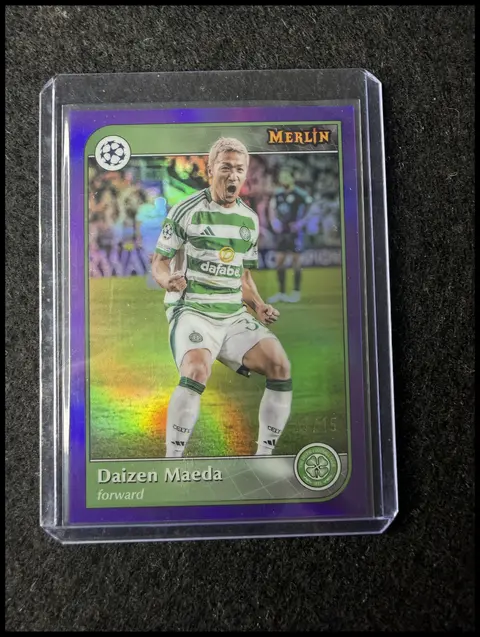
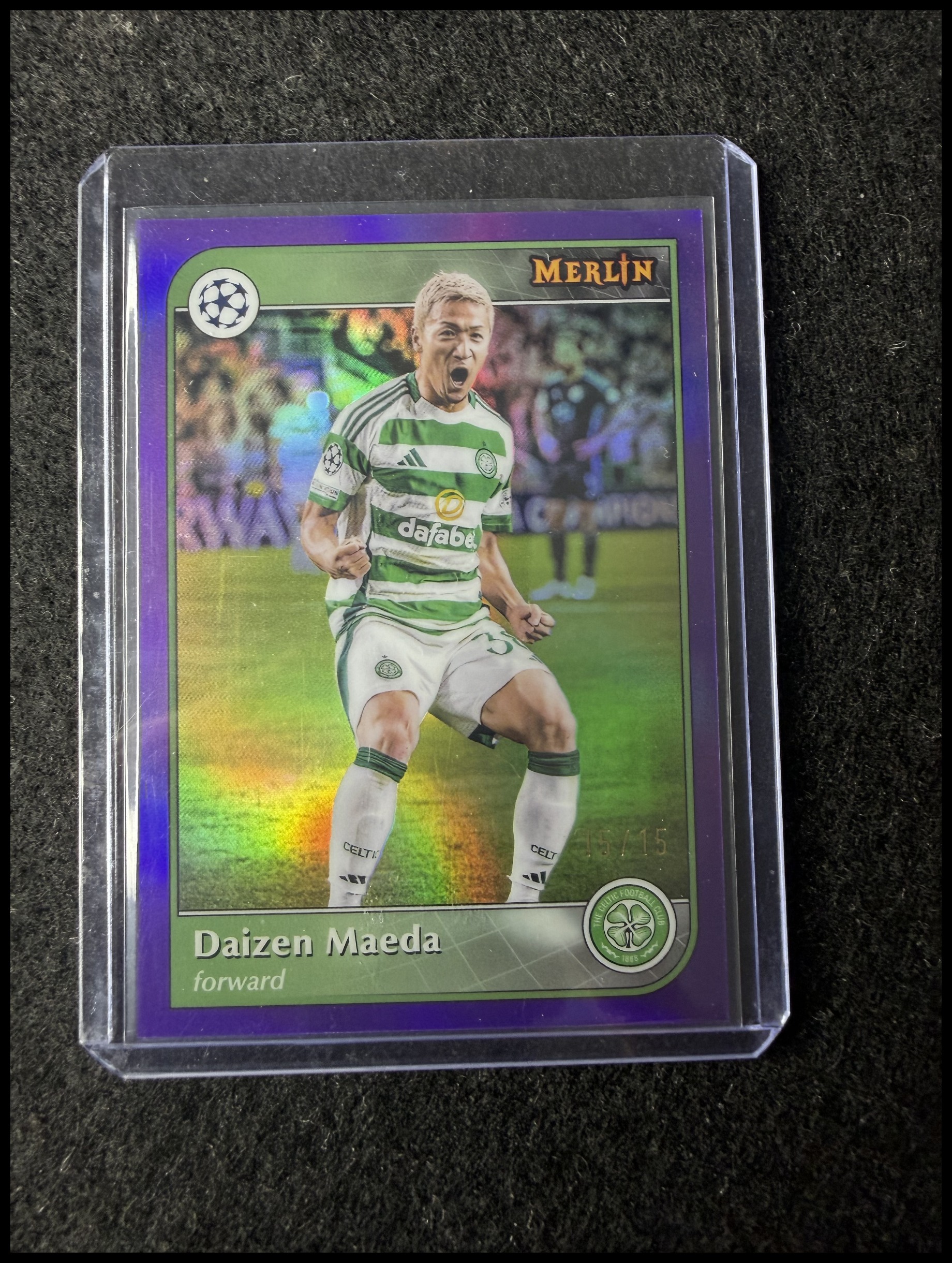
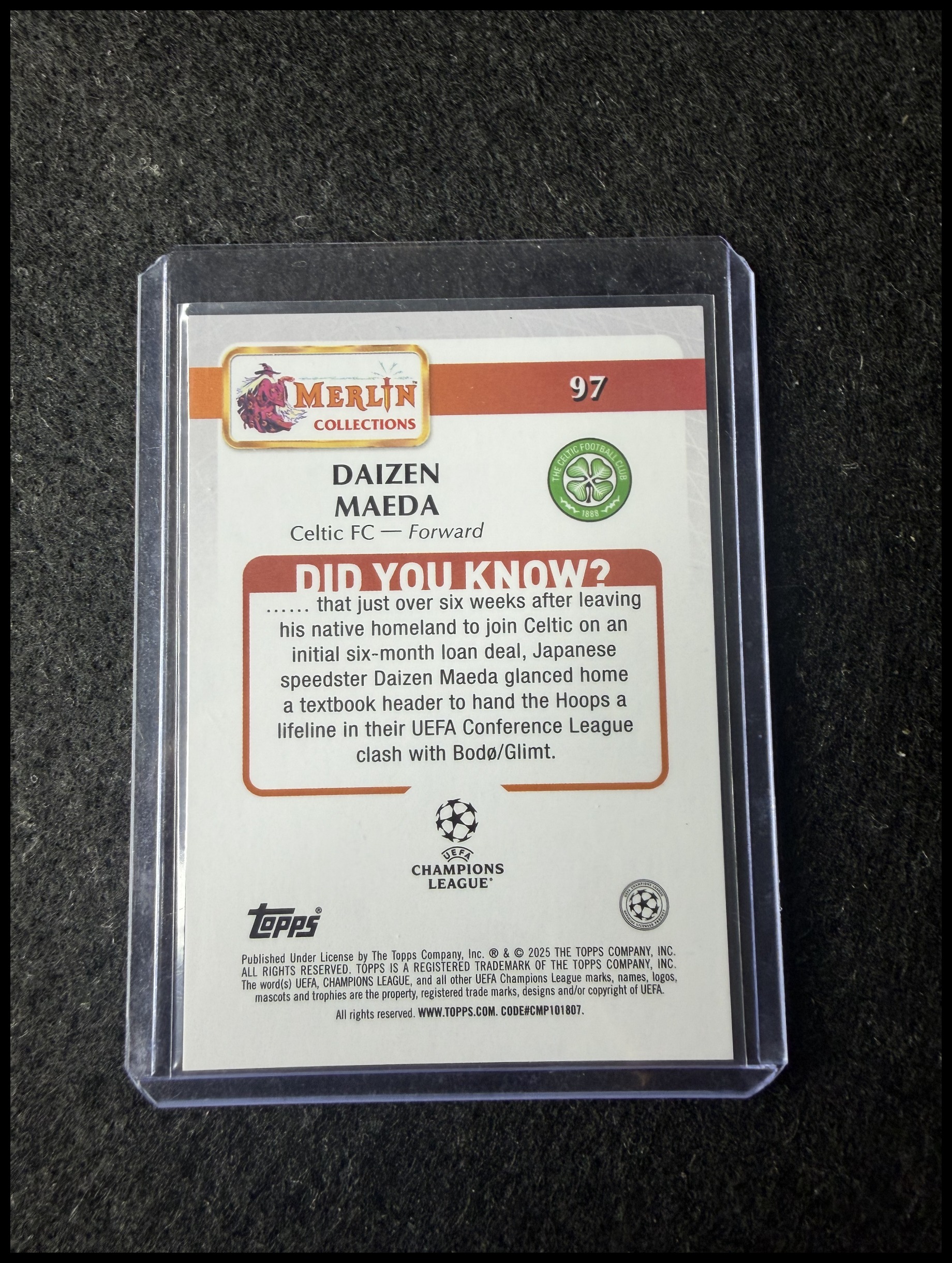
Daizen Maeda is a Japanese professional footballer who plays as a forward for Celtic and the Japan national team.[8] He is listed by EA SPORTS FC as a professional footballer from Japan who plays as a Left Wing for Celtic, with an overall rating of 79 in EA SPORTS FC 26.[2] In collecting terms, this card represents one of Celtic's key attacking players and a current international-level footballer, which makes his modern trading cards relevant to both Celtic collectors and Japan national team collectors.[1][2]
The most likely first release is the 2025 Topps Celtic collection, where a Daizen Maeda Base Parallel Aqua card numbered #29/199 is listed.[1] I could not verify a separate earlier 2025-printed Daizen Maeda serial-numbered football card from the provided results, so the safest identification is Topps Celtic 2025.[1][5]
- He was featured in the Topps Celtic 2025 collection as a limited-edition card.[1]
- A 2025-26 Daizen Maeda player jersey card limited to 100 pieces also exists, showing his presence in multiple 2025-era football card products.[3]
- He is an active Celtic attacker and Japan international, which usually supports broader collector demand than a retired or niche player.[2][8]
Rarity and print run
- Tier
- Rare
- Print run
- Low
- First printed in
- 2025 Topps Celtic
- Demand
- Medium
- Supply
- Low
- It is serial-numbered, which caps the print run.
- Parallel or special-format versions are typically scarcer than base cards.
- Demand is helped by dual collector bases: Celtic and Japan national team fans.
Collector notes
Condition. Check centering, sharp corners, edge whitening, surface scratches, print lines, and foil wear if the card is parallel or serial-numbered. For serial-numbered football cards, numbering alignment and any factory indentation or chipping around the foil/stamp area are important. Because modern Topps and other football cards often show surface scuffs under strong light, inspect the front and back carefully.
Storage. Use penny sleeves and rigid holders or top loaders immediately, and keep the card away from humidity, heat, and direct sunlight. For serial-numbered parallels, many collectors prefer an acid-free sleeve inside a semi-rigid holder or a graded/graded/graded slab for long-term protection. Store the card flat to avoid corner pressure.
Authenticity. Verify the exact serial number, print quality, and card stock against known Topps-style production standards. Authentic serial-numbered cards should have clean numbering, consistent foil application, and no off-register text or blurry logos. If the card is from a marketplace listing, compare the design and numbering to confirmed examples such as the 2025 Topps Celtic Aqua parallel #29/199 and other 2025 Daizen Maeda cards in TCDB-style catalog listings.[1][5]
Sources: ikonicmedia.co.uk, ea.com, kohinoorreclamations.com, sportscardspro.com, tcdb.com