Market outlook
Stable Outlook 7/10
Demand is anchored by Joe Morgan’s Hall of Fame status and rookie-card status, but the card is mature and widely traded. Premiums should continue to be strongest for high-grade copies, while lower grades likely remain steady.
Next months. Likely stable with occasional spikes for strong-eye appeal examples and certified high grades.
Long term. Expected to remain a blue-chip vintage rookie card with gradual appreciation in top grades and steady collector demand overall.
History
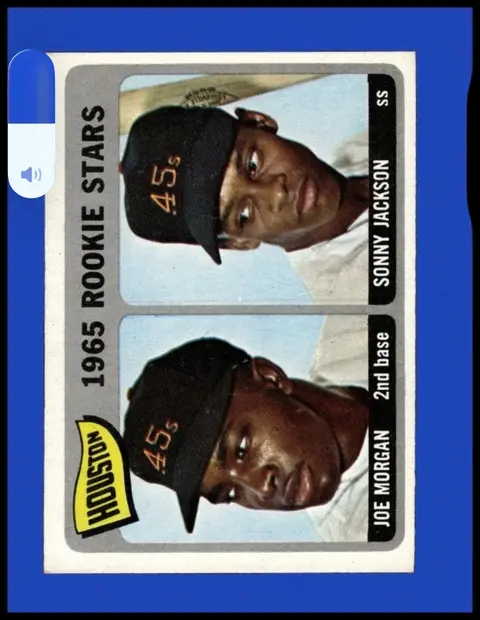
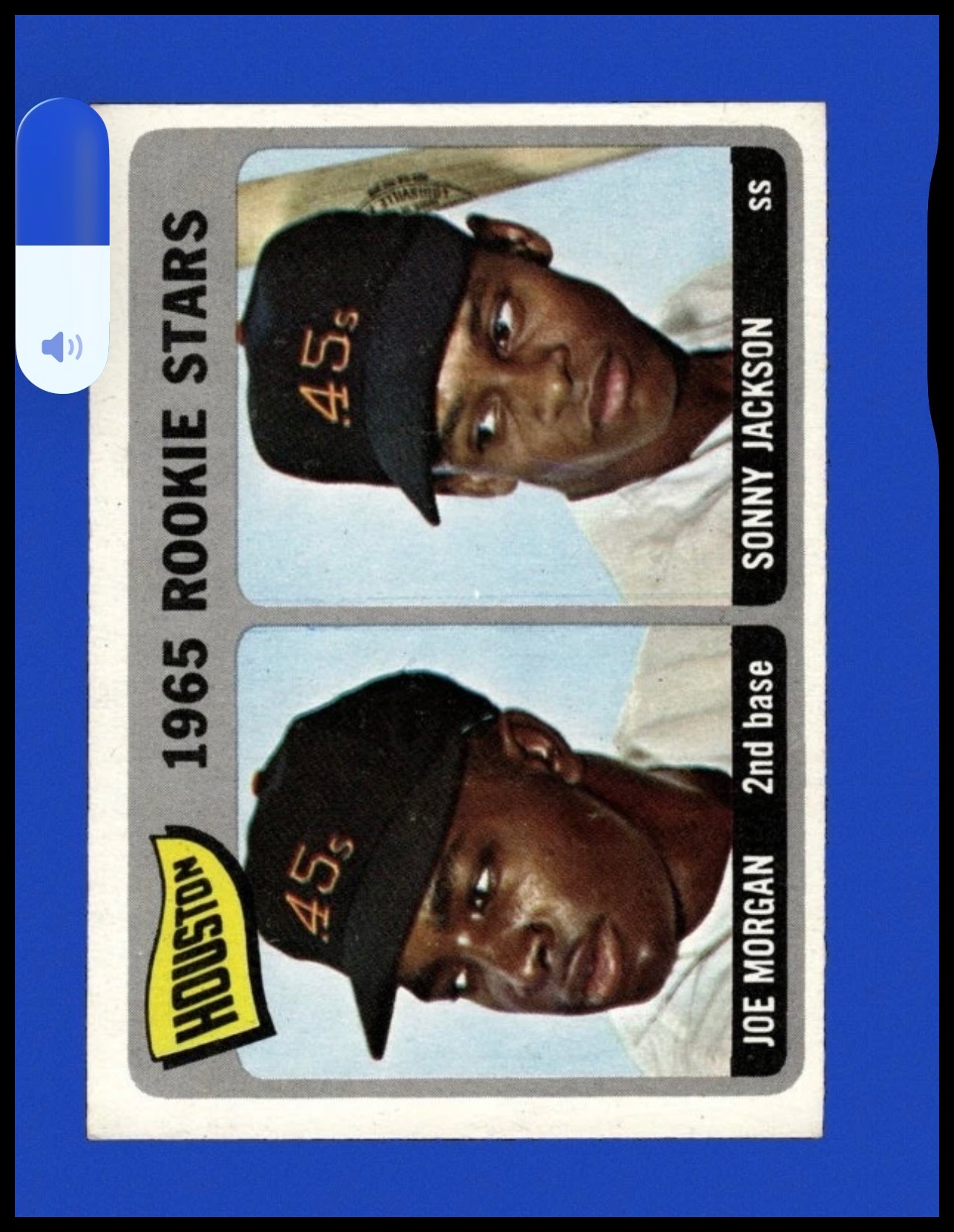
Joe Morgan was a Hall of Fame second baseman whose career began with the Houston Colt .45s/Houston Astros and later blossomed into one of the defining careers of the 1970s, highlighted by two NL MVP awards, elite on-base skills, speed, and key roles on the Big Red Machine. Sonny Jackson was a Houston infield prospect and the first Black player in Astros franchise history, making this shared rookie-style card notable for pairing Morgan’s first card appearance with another important early Houston player. The card is significant because it captures Morgan’s rookie debut in the 1965 Topps set, which is one of the flagship rookie issues of the 1960s.
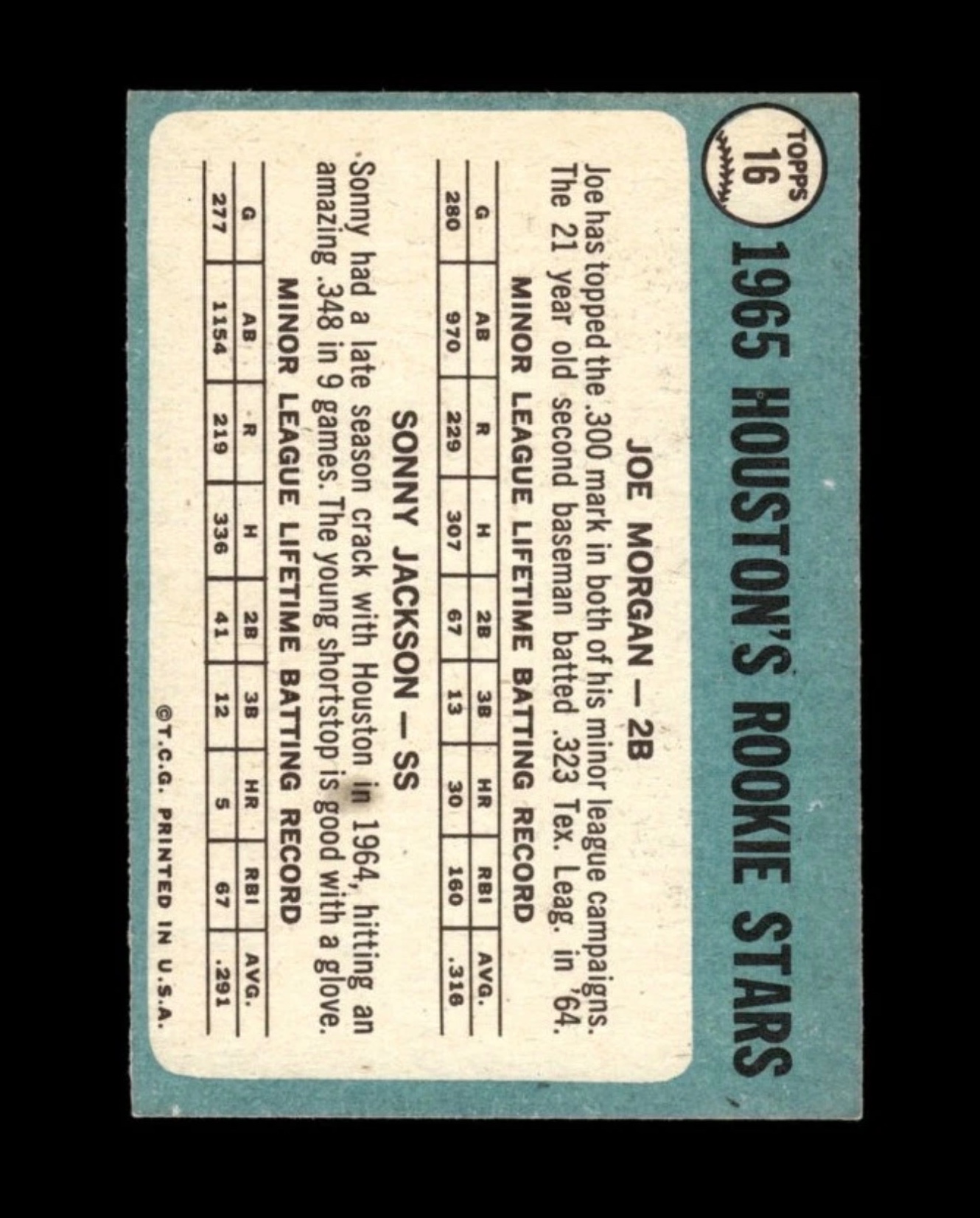
First released in the 1965 Topps Baseball set, which Topps issued in series throughout 1965 in the United States. Card #16 appeared in the first series of the set and is commonly identified as 'Astros Rookies' or 'Houston Rookies.'
- This is Joe Morgan’s first baseball card and one of the key rookie cards in the 1965 Topps set.
- The card is a double-player rookie card shared with Sonny Jackson, which was common for Topps rookie presentations in that era.
- The image reflects the Houston team identity transition period, with the Astros having recently moved into the Astrodome and changed from the Colt .45s name.
- graded and major price guides treat it as a major Hall of Fame rookie issue, with high-end condition examples bringing strong premiums.
Rarity and print run
- Tier
- Common
- Print run
- Very High
- First printed in
- 1965 Topps Baseball
- Demand
- High
- Supply
- High
- It was printed in a very large flagship Topps release, so raw supply is substantial.
- High-grade copies are scarce because centering and edge wear are difficult on 1960s Topps cards.
- The card is more scarce in gem or near-gem condition than in absolute population of all copies.
Collector notes
Condition. Check centering first, since 1960s Topps cards often sell at a premium when well-centered. Look for corner wear, edge chipping, print snow, surface scuffs, wax staining, and color fading. The dark borders and photo-heavy design make whitening and corner touch-up especially noticeable.
Storage. Store in a penny sleeve and rigid holder or semi-rigid card saver for graded submission. Keep it away from humidity, heat, and direct light. For raw copies, use an acid-free sleeve/toploader combo and avoid frequent handling.
Authenticity. Authentic copies should show consistent 1965 Topps printing traits, stock, and aging. Watch for suspiciously sharp corners with aged surfaces, overly bright paper stock, incorrect color density, and reprint-like gloss. Compare the back text, card stock thickness, and print pattern against verified examples; grading is the safest route for high-value copies.
Sources: sportscardspro.com, deanscards.com, psacard.com, cardsmithsbreaks.com, cardlines.com