Market outlook
Rising Outlook 8/10
Over the past year, the 1989 Upper Deck rookie has exploded in price, with gem-mint copies reaching $4,000-$5,000. Experts predict it could reach $10,000 by 2030 due to its iconic status and scarcity of high-grade copies[2].
Next months. Next 3-6 months: Prices expected to continue rising, with gem-mint copies potentially reaching $5,500-$6,000 as demand increases[2].
Long term. 1-3 year prediction: Strong growth expected, with potential to reach $8,000-$10,000 by 2030, driven by its status as a modern-era symbol and grading scarcity[2].
History
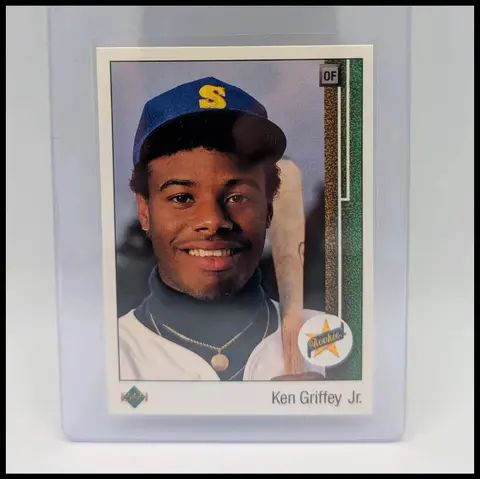
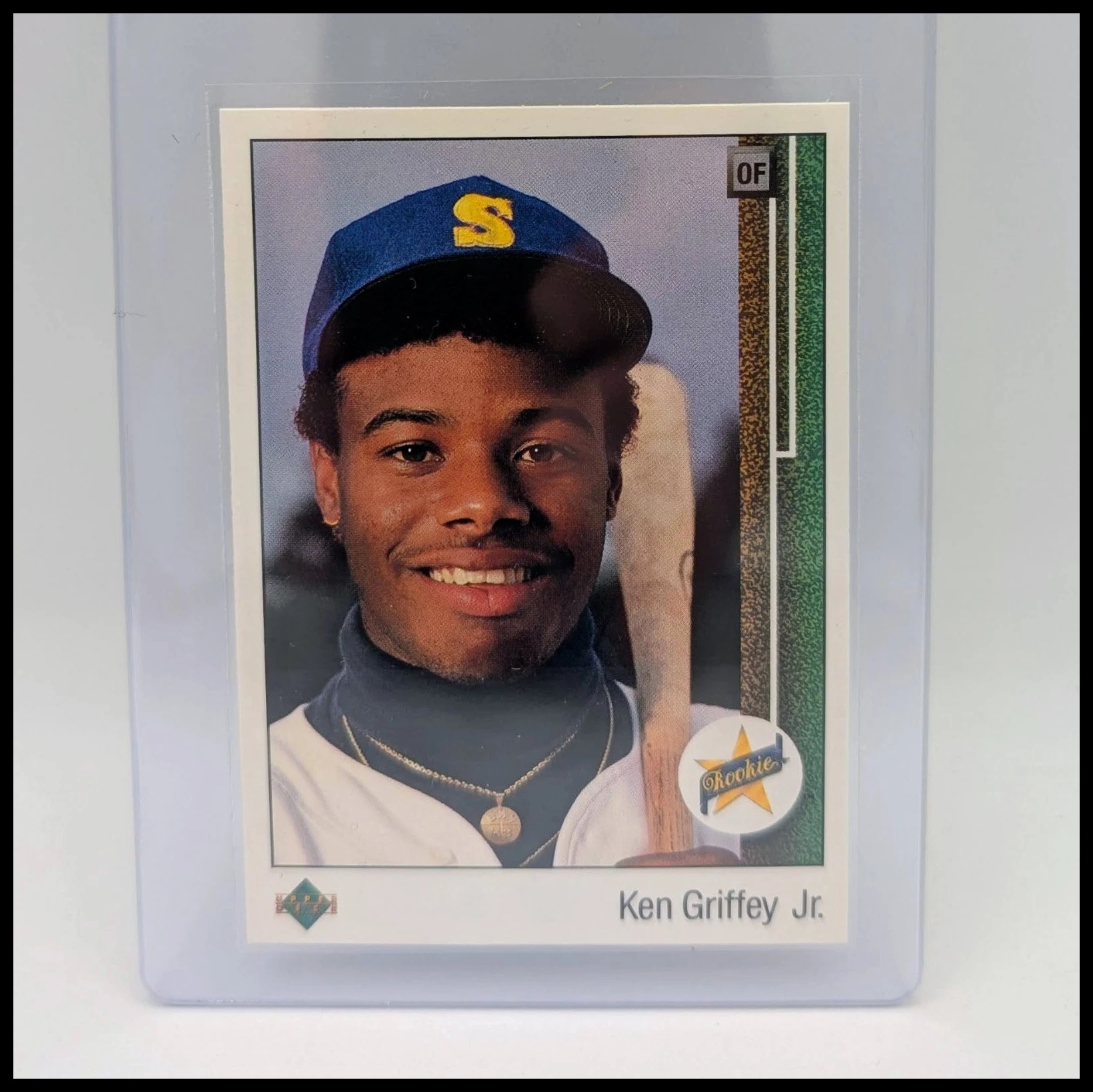
Ken Griffey Jr. is one of the most symbolic and best all-around players in baseball history. Selected as the key rookie of an elite player, his career was marked by amazing feats despite being overshadowed by Barry Bonds and hampered by injuries late in his career[1]. The card features Griffey wearing an old blue and yellow Mariners hat and necklace, becoming iconic and helping instantly launch Upper Deck as a major brand[6].
This card was first released in 1989 as part of the inaugural Upper Deck baseball set, marking the debut of the brand into the trading card market[1].
- It is the key rookie card of one of the best all-around players in baseball history[1].
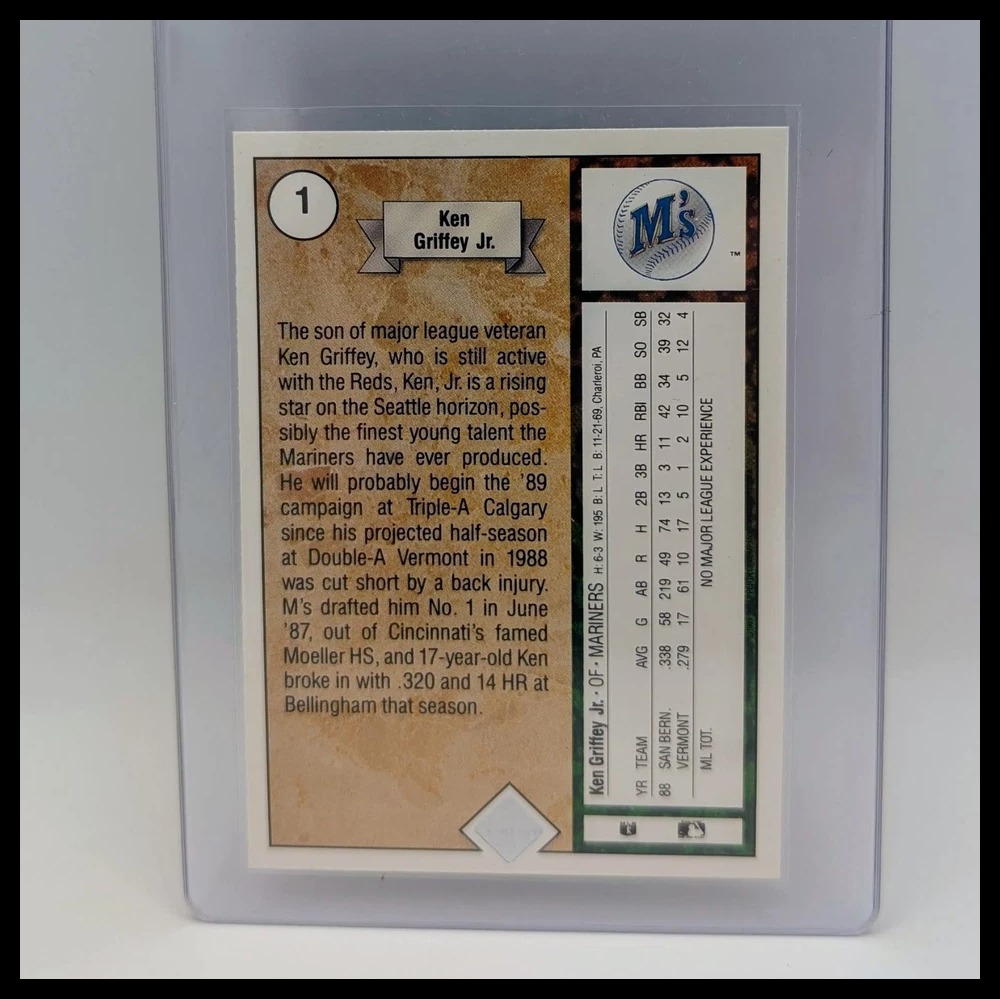
- Many copies contain a hidden factory wrinkle on the reverse that can severely diminish the grade, often capping it at graded EX-MT 6 or lower if present[1].
- It is considered one of the hardest baseball cards to get a GEM MT 10 grade due to this factory flaw and high grading population[4].
Rarity and print run
- Tier
- Common
- Print run
- Very High
- First printed in
- 1989 Upper Deck
- Demand
- High
- Supply
- Scarce
- The hidden factory wrinkle on the reverse makes obtaining a GEM MT 10 extremely difficult[1].
- It is the hardest card in baseball to grade a 10 and has a high population controlled by graded[4].
- Hologram alignment and damage significantly affect rarity and value, reducing the pool of high-grade copies[4].
Collector notes
Condition. Key things to check include the reverse for a factory wrinkle (hidden flaw), which can prevent a GEM MT 10 grade. The alignment of the front image and the placement of the hologram sticker on the back are crucial; off-center or damaged holograms drastically drop the grade and price from $80-$100 to $10-$20[1][4].
Storage. Best practices involve keeping the card in a protective sleeve or hard case, avoiding exposure to moisture to prevent accentuating the factory wrinkle. Ensure clear images of front and back are captured for tracking, and store distinctively to avoid confusion with reprints or similar cards[4].
Authenticity. To spot fakes, compare the hologram sticker to known graded GEM MT 10 copies; a slightly off-center or damaged hologram is a common indicator of lower authenticity or grade. The card is population controlled by graded, and high-grade copies are rare, making authentication critical[4].