Market outlook
Stable Outlook 7/10
Demand for Mantle remains consistently strong, but the card is already widely recognized and heavily traded, so pricing tends to move in grade-sensitive increments rather than dramatic swings. Recent sales show active liquidity across multiple grades.
Next months. Likely to remain stable to slightly rising for clean, well-centered graded copies, with lower-grade raw examples staying liquid but less volatile.
Long term. Over 1-3 years, high-grade and premium eye-appeal examples should continue to outperform, while average raw copies should track the broader Mantle market with moderate appreciation.
History
Mickey Mantle was a legendary New York Yankees outfielder and switch-hitter who became one of the most iconic players in baseball history. He debuted in 1951, won multiple MVP awards, and was a central figure on the Yankees during their dominant 1950s-1960s era. His significance to this card is that 1965 Topps #350 is one of his later mainstream Topps base cards from the mid-career period, highly collected because Mantle remains one of the sport's most recognized and historically important stars.
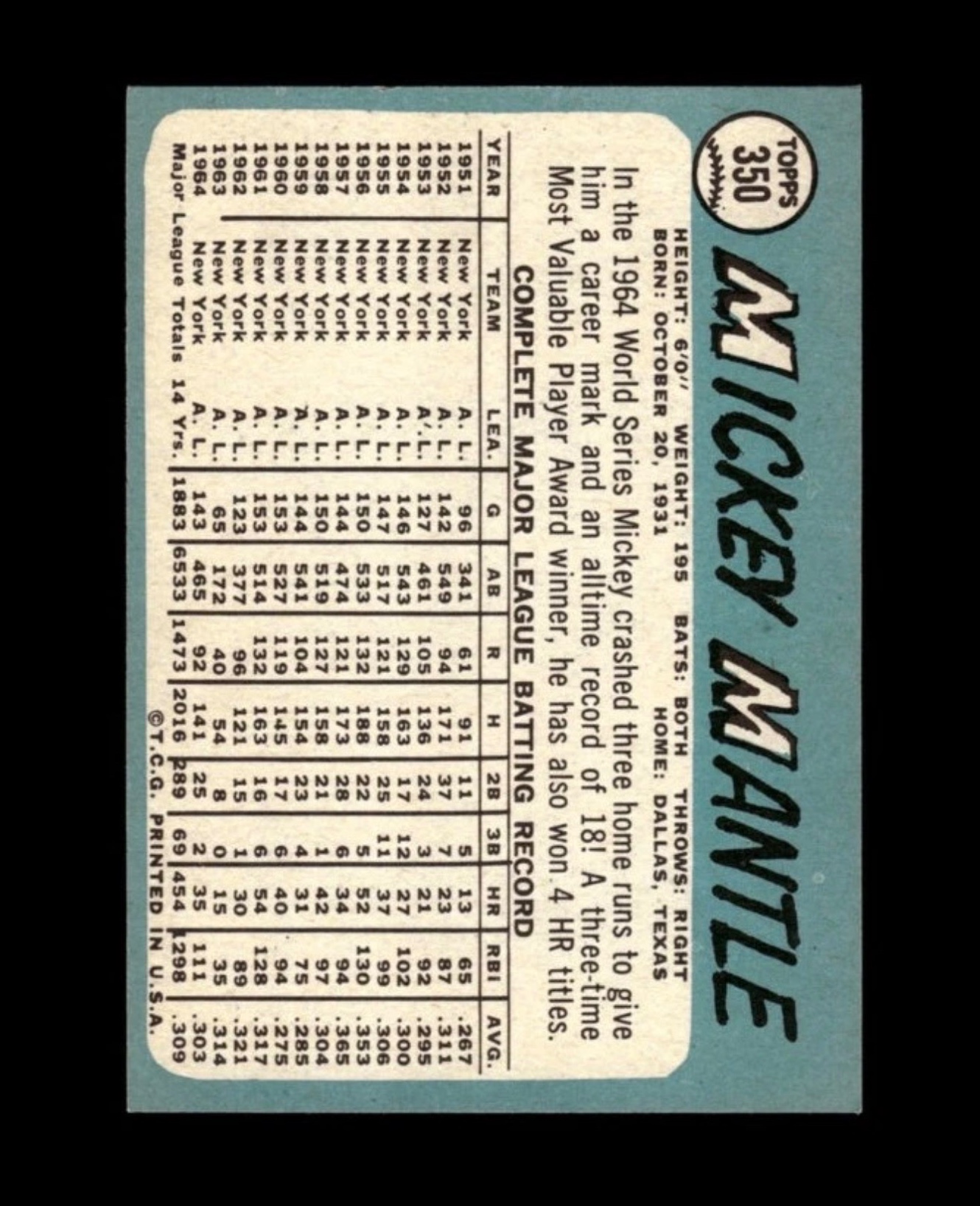
The card was first released in 1965 as part of the Topps Baseball set, specifically card #350 in the Series 4 print group (#265-352), distributed in the United States through Topps' standard wax pack and cello pack channels.
- 1965 Topps Baseball contained 598 cards, and Mantle #350 is in Series 4, which is generally easier to find than the high-number series.
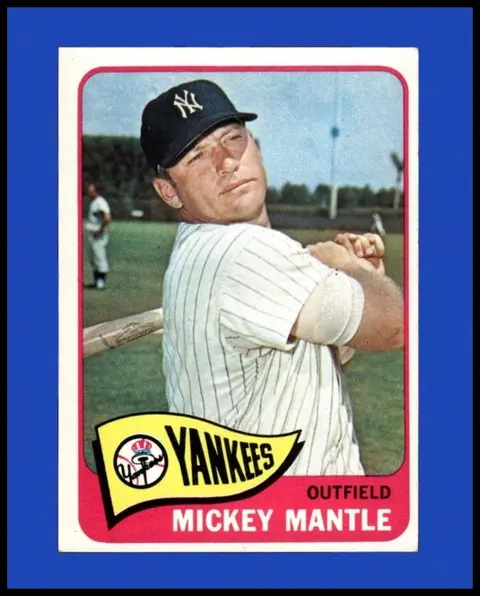
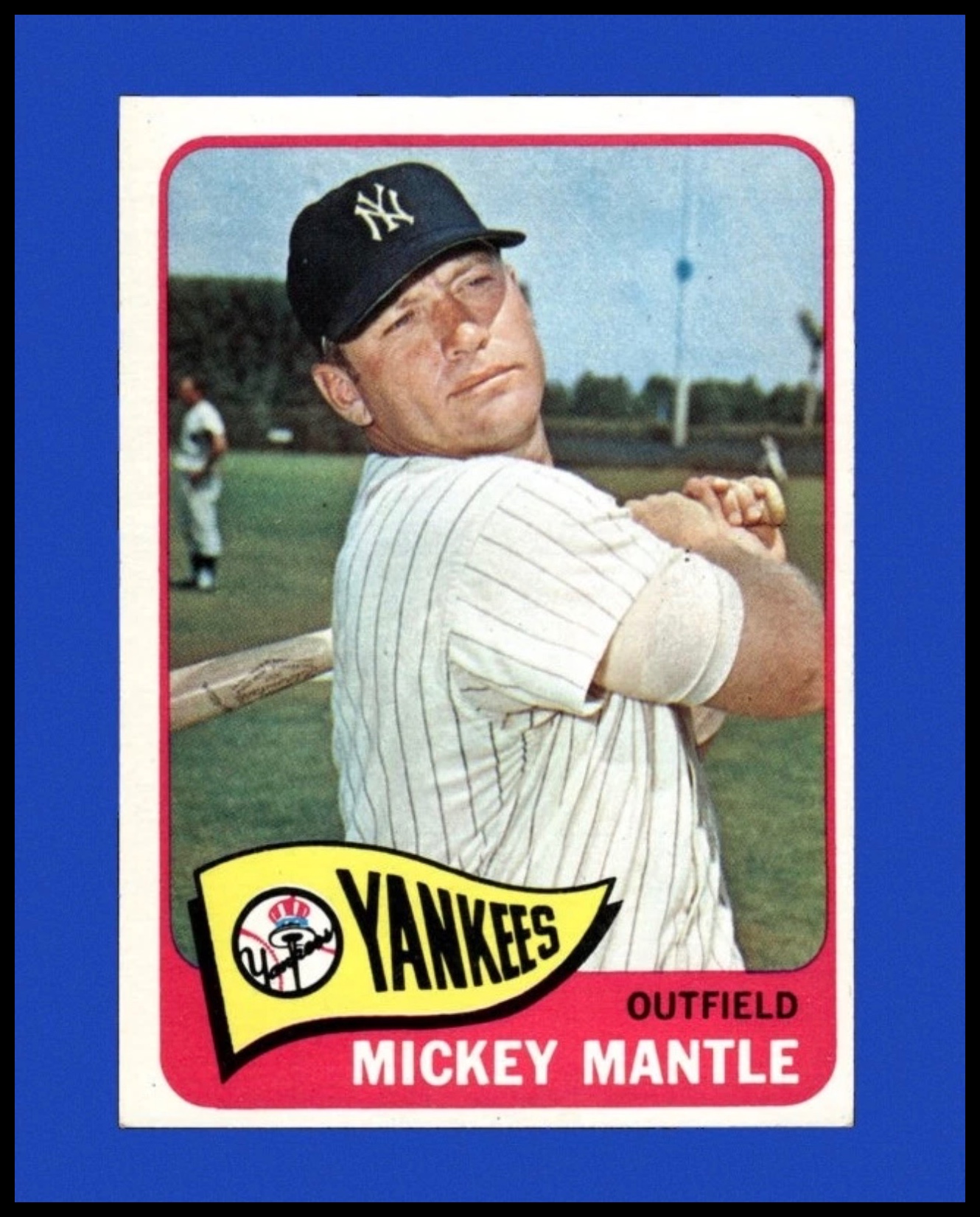
- The card is notorious for poor centering, with many surviving examples showing noticeable left/right image shift.
- Public price guides and recent sales show large condition sensitivity, with graded examples ranging from low hundreds in lower grades to several thousand dollars in higher grades.
Rarity and print run
- Tier
- Common
- Print run
- Very High
- First printed in
- 1965 Topps Baseball
- Demand
- Very High
- Supply
- Medium
- It comes from a large mainstream Topps base set rather than a short-print issue.
- Series 4 placement means it is not part of the toughest high-number run.
- High-grade examples are scarce because centering, corner wear, and surface flaws are common.
Collector notes
Condition. Check centering first, since this issue is the most common flaw. Also inspect corners for rounding, edges for chipping or trimming, and the surface for print snow, wax staining, and scuffing. Because the card is often miscut or off-center, a well-centered copy is especially desirable and often commands a premium.
Storage. Store in an acid-free penny sleeve and semi-rigid holder or top loader, kept in a cool, dry, low-light environment. Avoid PVC materials, excessive handling, and humidity, as this card's stock and print quality can show wear easily. For higher-value copies, sealed graded encapsulation is preferred.
Authenticity. Compare the card stock, print quality, border tone, and reverse text sharpness against known authentic examples. Reprints and altered cards may show unnaturally bright borders, inconsistent aging, unusually clean edges, or trimming. Because collectors note that real examples can be oddly centered or even miscut, a perfectly centered card should be examined carefully for tampering.
Sources: oldsportscards.com, sportscardinvestor.com, forums.collectors.com, nw-sportscards.com, sportscardspro.com