Market outlook
Rising Outlook 8/10
Recent sales data shows consistent price appreciation with graded 9 and graded 8 copies gaining value over the last 30 days. Pete Rose's legendary status and Hall of Fame induction continue to drive collector interest in his vintage cards.
Next months. Expect continued stable to modest price appreciation. graded 8-9 copies likely to see incremental gains as collectors seek this iconic vintage card. Market activity should remain solid.
Long term. Strong long-term outlook with anticipated appreciation driven by scarcity of high-grade examples, enduring Pete Rose popularity, and general strength of 1960s vintage card market. Condition-sensitive pricing will likely see higher grades appreciate faster than lower grades.
History
Pete Rose, nicknamed 'Charlie Hustle', is one of baseball's most iconic figures and all-time great hitters. Born in 1941, Rose played primarily for the Cincinnati Reds and became MLB's all-time leader in hits with 4,256 career hits. He was a 17-time All-Star and won the National League MVP award in 1973. Rose's aggressive playing style and consistent excellence made him a fan favorite throughout his career.
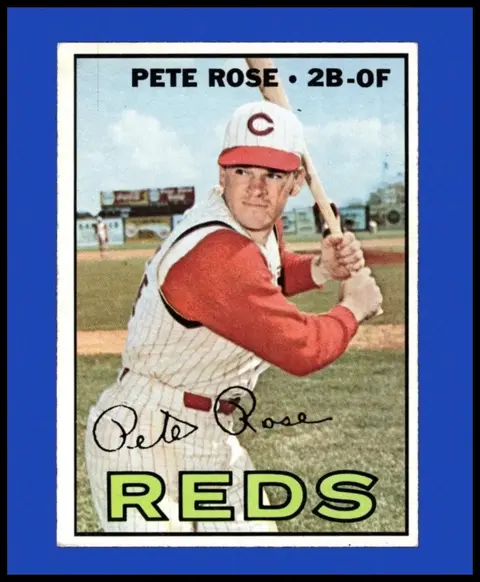
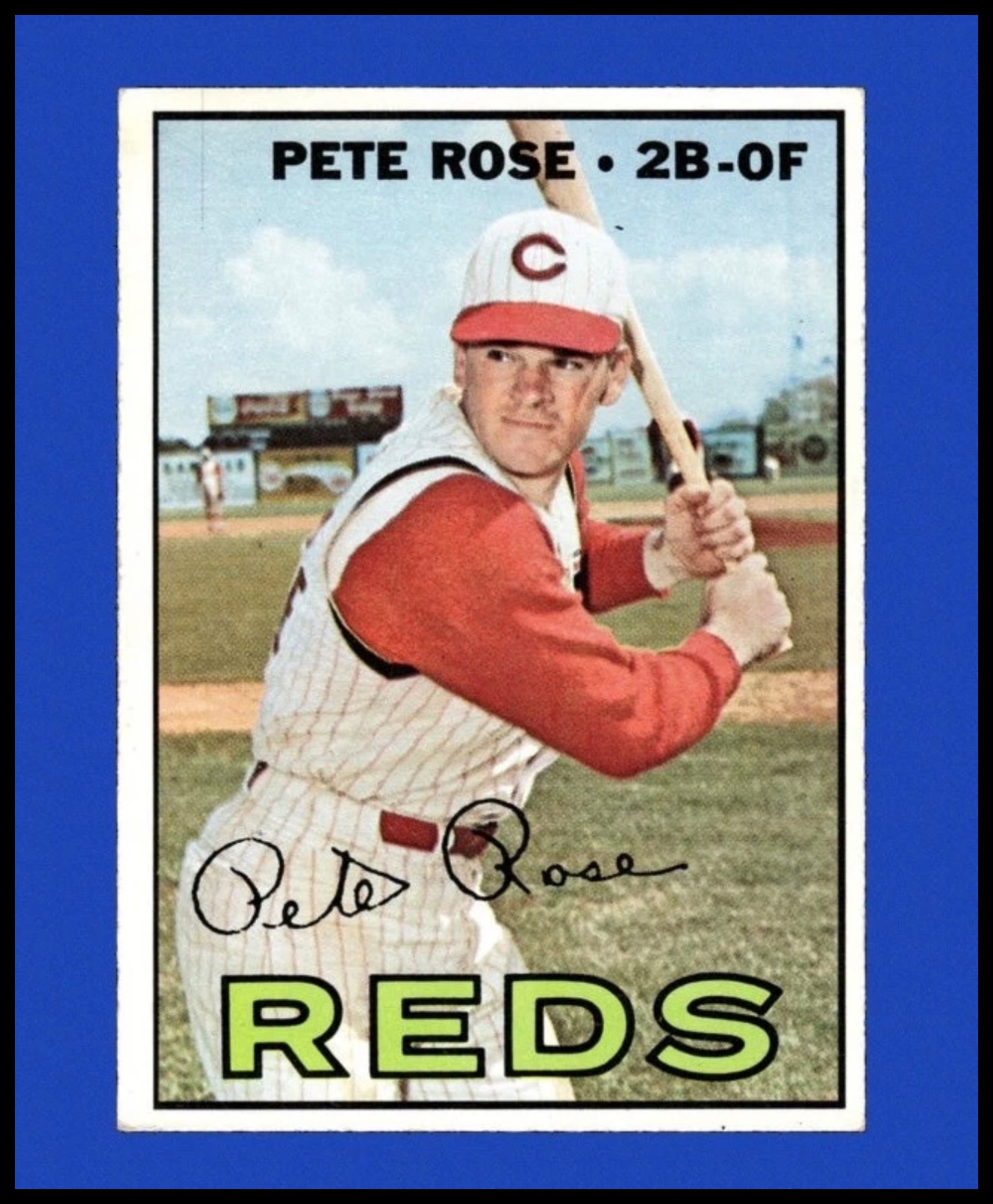
1967 Topps Set - Released in 1967 during Rose's prime years with the Cincinnati Reds when he was establishing himself as one of baseball's elite players
- Pete Rose was inducted into the Baseball Hall of Fame in 2016 with 4,256 career hits - the most in MLB history
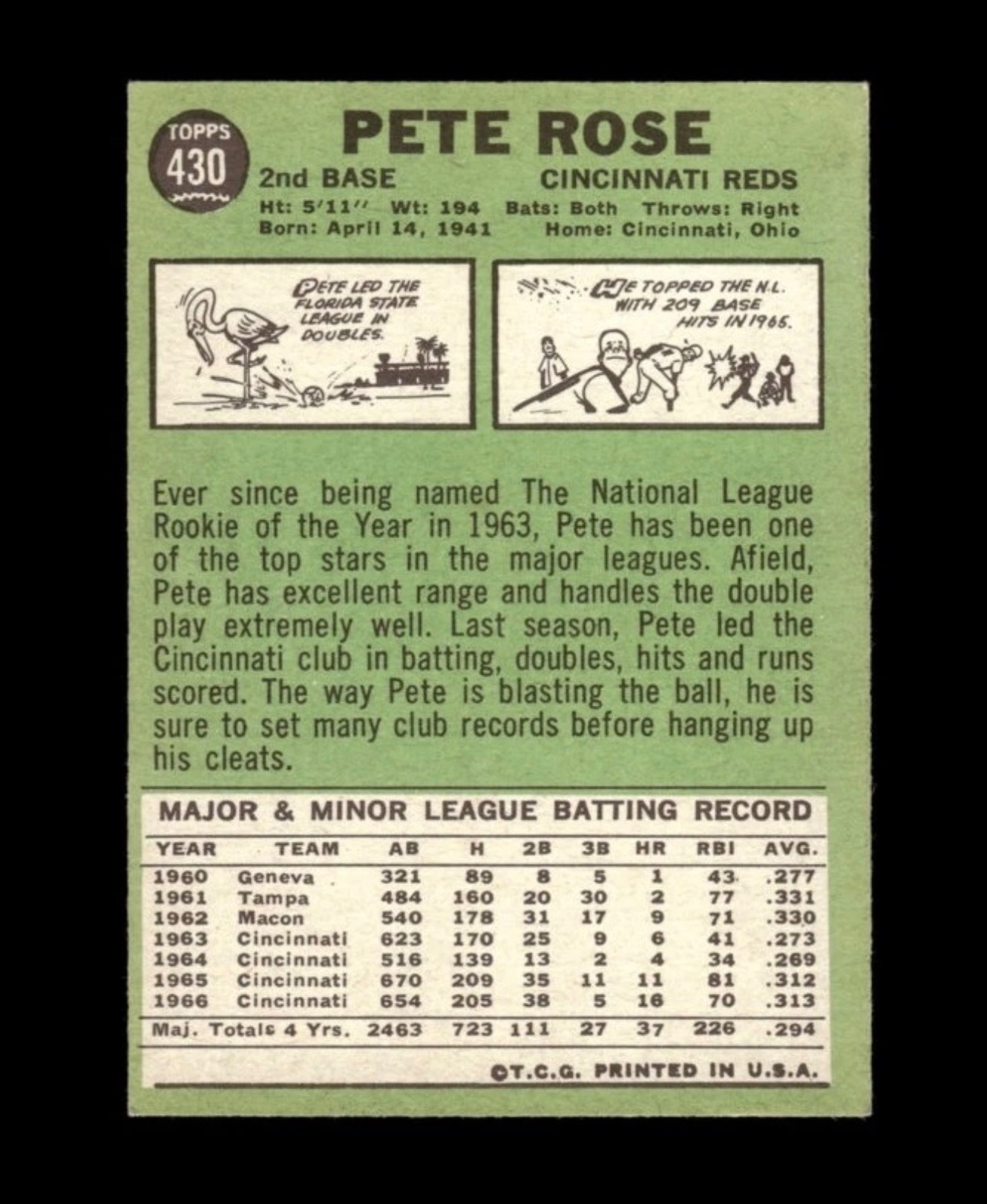
- The 1967 Topps #430 was issued during Rose's peak years when he was becoming a baseball legend
- Rose's cards from the 1960s are highly sought after by collectors due to his legendary status and the vintage nature of 1960s Topps cards
Rarity and print run
- Tier
- Uncommon
- Print run
- High
- First printed in
- 1967 Topps Baseball
- Demand
- Very High
- Supply
- Medium
- Base card from 1967 Topps - originally high print run
- Condition scarcity - high-grade copies (graded 8+) are scarce
- Centering issues common in 1967 Topps limits gem-mint copies
- Age and storage conditions have reduced population of well-preserved examples
Collector notes
Condition. Key condition factors include checking for centering issues (common in 1967 Topps), corner wear and rounding, surface scratches on the photo area, print spots or ink imperfections, and edge wear. The card's bright colors can fade with light exposure. Check for stains or discoloration on both front and back.
Storage. Store in graded/graded sleeve within acid-free cardboard case. Keep in climate-controlled environment away from direct sunlight, humidity extremes, and temperature fluctuations. Use acid-free storage boxes and avoid rubber bands or paper clips. Consider UV-protective storage cases for high-value copies.
Authenticity. Authentic 1967 Topps cards have characteristic glossy finish and specific color registration patterns. Reprints typically have softer colors and different cardstock. Verify through graded or graded grading for valuable copies. Check for proper Topps copyright mark and printing characteristics. The card stock should feel appropriate for the era - not too modern or brittle.
Sources: steinersports.com, sportscardinvestor.com, collectrea.com, sportscardspro.com, psacard.com