Market outlook
Rising Outlook 8/10
Demand for iconic vintage Hall of Famers remains durable, and condition-sensitive 1960s Topps stars tend to appreciate over time as top population examples are absorbed by long-term collectors. Willie Mays is one of the sport's strongest evergreen names.
Next months. Likely stable to modestly higher, with premium examples continuing to outperform average raw copies.
Long term. Expect gradual appreciation, especially for graded/graded high-grade copies with strong centering and eye appeal; lower-grade raw examples should remain liquid but may rise more slowly.
History
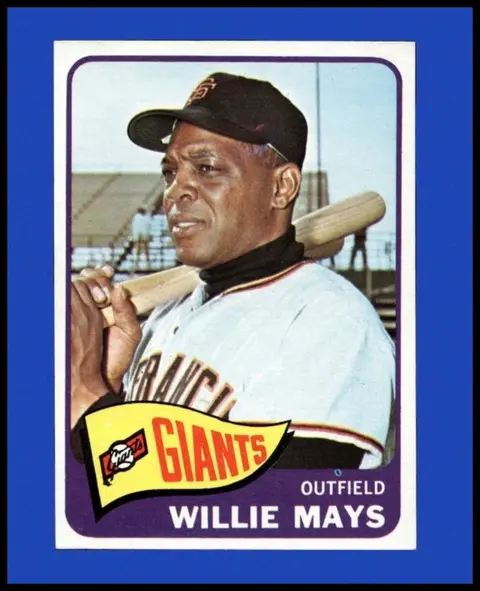
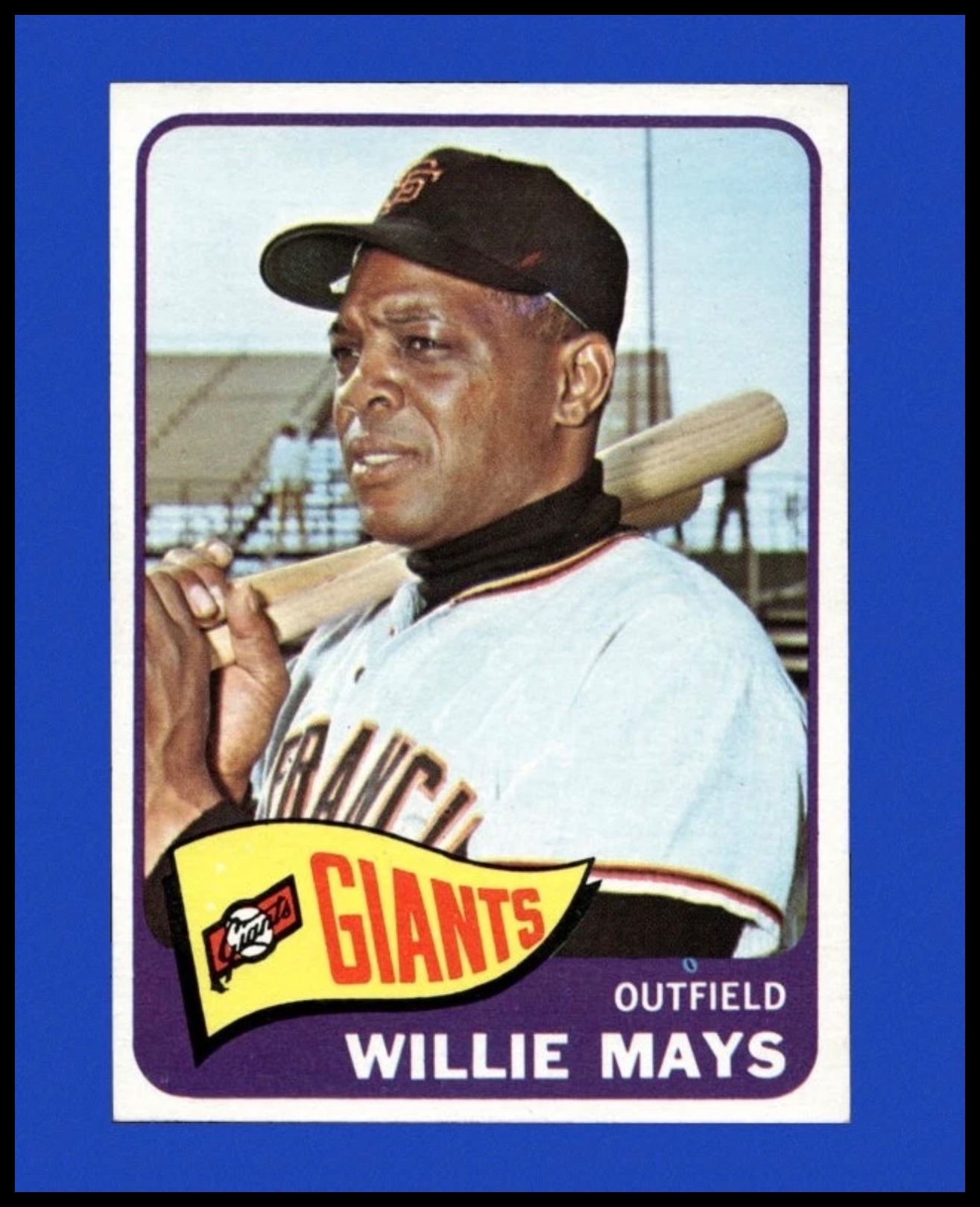
Willie Mays (Willie Howard Mays Jr.) is one of the greatest all-around players in baseball history, known for elite hitting, power, speed, defense, and iconic moments such as the 'catch' in the 1954 World Series. By 1964, Mays was already an established San Francisco Giants superstar and one of the most collectible players of the vintage era. His 1964 Topps card captures him during the prime late stage of a Hall of Fame career, making it historically significant both as a player issue and as a representation of one of baseball's most enduring legends.
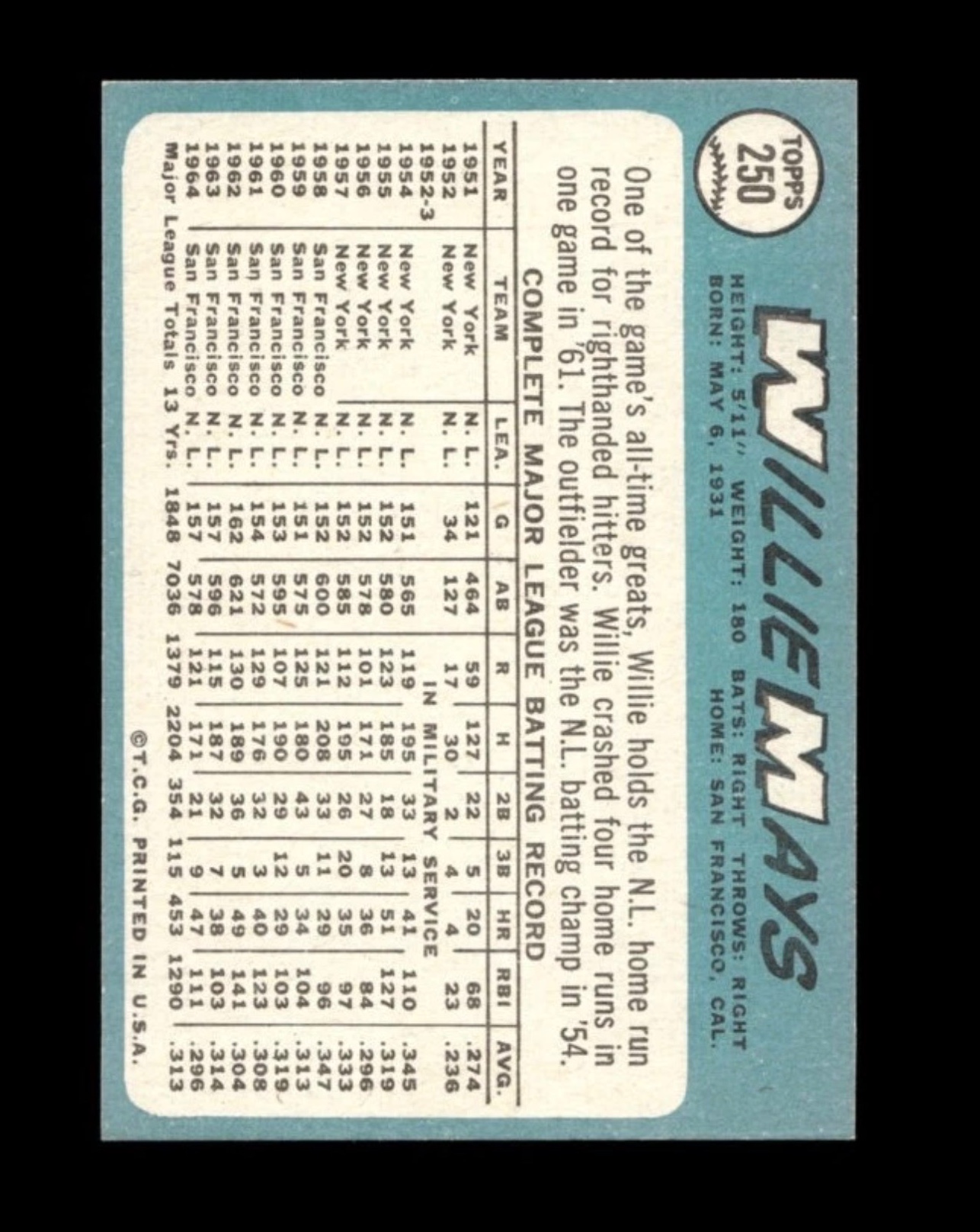
First issued in 1964 as part of the Topps Baseball set, distributed in the United States through hobby and retail pack sales. The card was printed by Topps for the 1964 baseball card release and appears in the standard 1964 Topps series numbering as card #150, not #250.
- Willie Mays is a Hall of Fame icon and one of the most sought-after vintage baseball subjects across multiple Topps issues.
- The 1964 Topps Willie Mays card is commonly referenced as card #150 in standard checklists; #250 corresponds to his 1965 Topps card.
- High-grade examples are strongly pursued because centering, corners, and print quality on 1960s Topps cards are often problematic.
Rarity and print run
- Tier
- Common
- Print run
- Very High
- First printed in
- 1964 Topps Baseball
- Demand
- Very High
- Supply
- High
- Base-set card from a mass-produced Topps release
- Many raw examples survive, but gem-mint quality is scarce due to centering and edge wear
- High-grade certified copies are disproportionately scarce versus raw supply
- Hall of Fame player demand keeps stronger copies competitive even though the card itself is not rare
Collector notes
Condition. Check centering carefully, especially left-right and top-bottom alignment. Common flaws include rough or soft corners, edge chipping, print snow/surface speckling, wax staining, and off-centered cuts. Because 1964 Topps cards have dark borders and bright photo areas, corner wear and edge whitening are especially visible.
Storage. Store in a penny sleeve and rigid toploader or semi-rigid holder, ideally inside a team bag. Keep away from humidity, direct sunlight, and temperature swings. For higher-grade copies, use archival-safe materials and consider professional grading if the card is strong enough to justify encapsulation.
Authenticity. Look for consistent vintage stock, correct paper gloss, and authentic 1960s printing characteristics. Reprints may show overly sharp printing, modern paper feel, or unnatural color saturation. Compare the back stock and font alignment to verified examples. For expensive copies, third-party grading from graded, graded, or graded Cards is the safest authentication route.
Sources: oldsportscards.com, psacard.com, sportscardspro.com, throwbacksportscards.com, deanscards.com