Market outlook
Stable Outlook 7/10
The market remains stable due to Koufax's enduring legacy, moderate collector interest in vintage baseball, and consistent pricing for graded copies, with no sharp appreciations or declines in the last 30 days[2].
Next months. Next 3–6 months: Stable pricing with minor fluctuations; graded 8 white back expected to hold near $3,500–$4,600 range[2].
Long term. 1–3 years: Moderately rising trend driven by increasing scarcity of high-grade copies and sustained interest in Koufax's legacy, with graded 9–10 gray back potentially reaching $50,000–$60,000[1].
History
Sandy Koufax (correctly spelled Sandy Koufax) is rightly considered perhaps the greatest left-handed pitcher the game has ever seen, dominating in the 1950s and 1960s as a star for the Brooklyn/Los Angeles Dodgers with 19 Career All-Star selections and 22 Career Wins above Expected, cementing his legacy as one of baseball's elite pitchers[6].
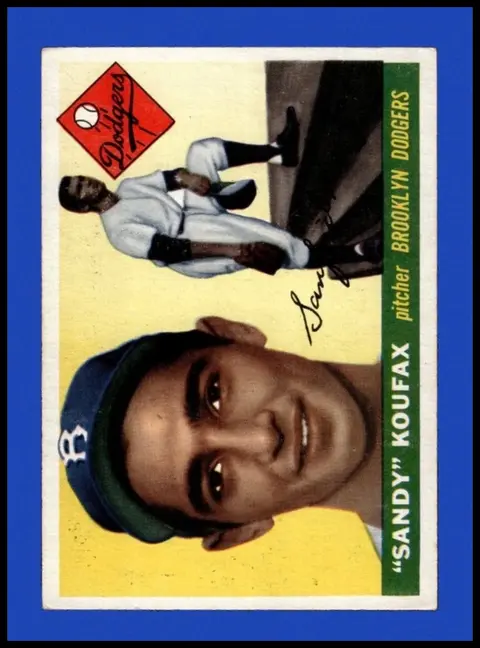
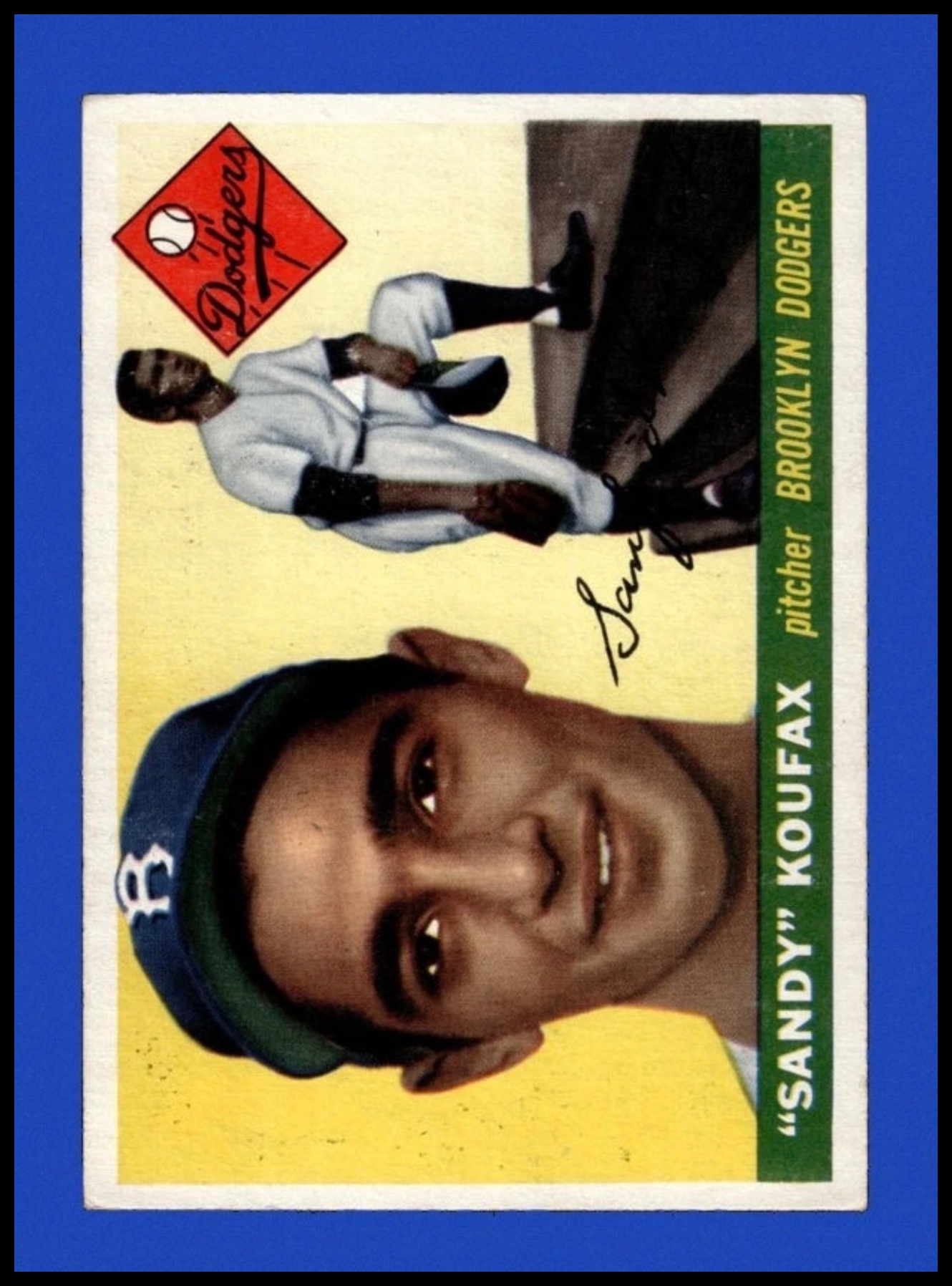
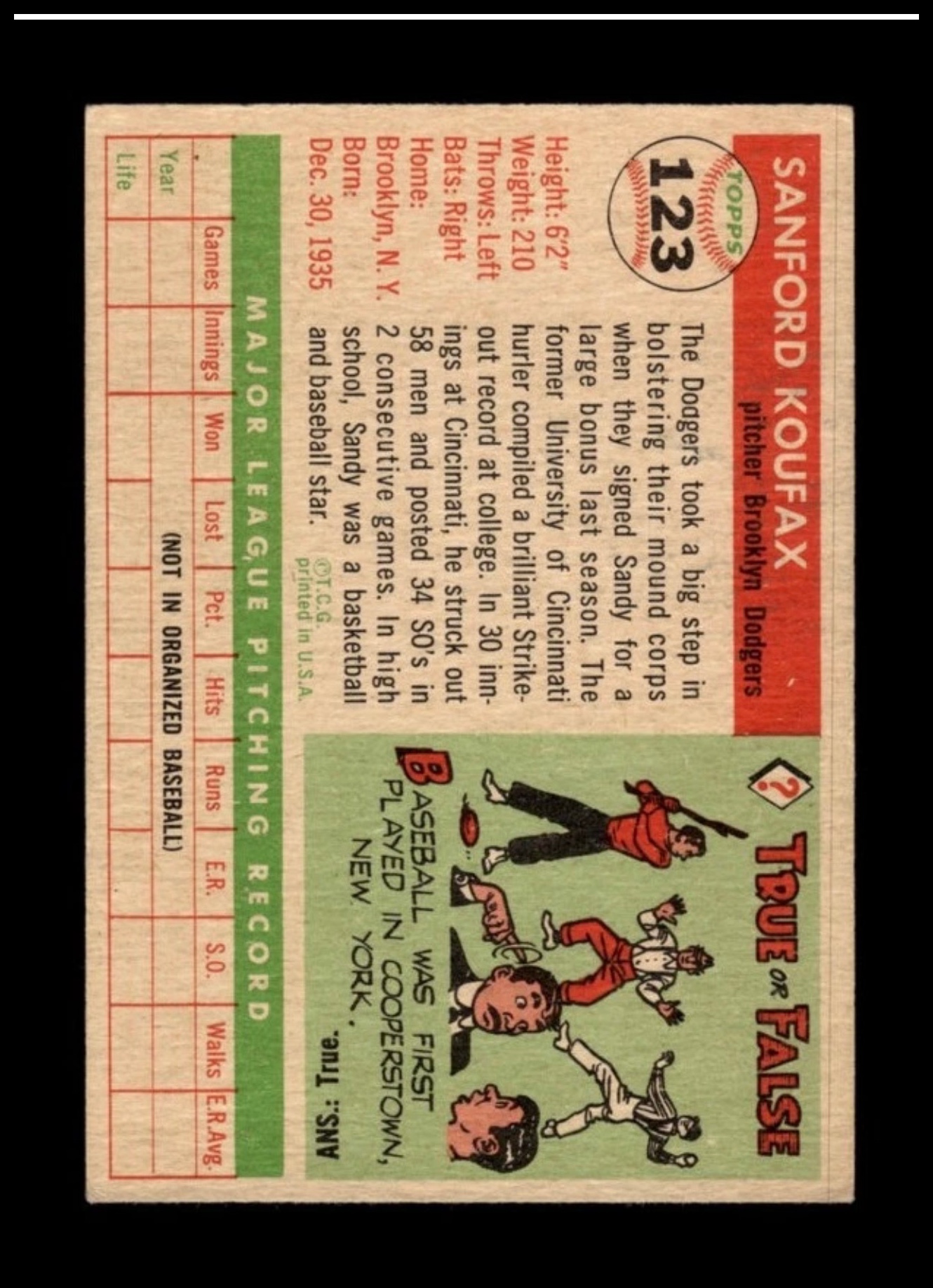
This card was first released in 1956 as part of the Topps Baseball set, specifically as card #79 (often misidentified as #123 in variants), marking Koufax's second Topps appearance following his 1955 rookie card in the same brand[1].
- Koufax is widely regarded as the greatest left-handed pitcher in baseball history with 19 Career All-Star selections and 22 Career Wins above Expected[6].
- The card features a white back version (graded 8 priced at $4,642.10) and a gray back version (graded 10 priced at $45,860.40), with the gray back being the more valuable variant[1][2].
- Uncopies in low grade range from $125–$200, while ungraded copies average around $240, reflecting moderate accessibility for vintage collectors[3][5].
Rarity and print run
- Tier
- Common
- Print run
- High
- First printed in
- 1956 Topps Baseball
- Demand
- Medium
- Supply
- Low
- Originally printed in high quantities as a common card in the 1956 Topps set
- Gray back variant is significantly rarer and more valuable than white back
- High-grade copies (graded 9–10) are scarce due to age and handling[1][5]
Collector notes
Condition. Key flaws include centering issues, edge wear, and surface scratches; the white back version is more prone to fading than the gray back, and graded 7–8 copies show typical wear around borders and corners[1][3].
Storage. Store in a rigid archival sleeve or top loader, avoid direct sunlight to prevent back fading, and keep in a climate-controlled environment with humidity below 50% to preserve paper integrity[2].
Authenticity. Fakes often have incorrect font or color on the back; authentic copies feature the distinct Topps 1956 logo and consistent white/gray back coloration, with graded or Beckett authentication confirming pedigree[1][2].
Sources: psacard.com, sportscardinvestor.com, sportscardspro.com, deanscards.com, throwbacksportscards.com