Market outlook
Stable Outlook 4/10
The card has steady collector interest because Jack Nicklaus is one of golf's most important figures, but the card's base-set status and high availability cap price growth. Most appreciation should come from graded high-end copies rather than raw examples.[2][3]
Next months. Likely to remain stable, with modest fluctuations driven by grading demand and occasional strong sales for graded 10 or graded 10 copies.
Long term. Over 1-3 years, the card should remain a steady low-dollar vintage-modern golf collectible, with the best upside concentrated in gem mint and pristine grades rather than raw cards.
History
Jack Nicklaus, nicknamed the 'Golden Bear,' is one of the most accomplished golfers in history and a central figure in the sport's modern era. He won 18 professional major championships, a record in men's golf, and his legacy includes both elite tournament success and major influence on golf's popularity and commercial growth. The card uses Nicklaus as a Hall-of-Fame subject rather than as a rookie or active-player issue, so its significance is primarily historical and collectible rather than developmental.
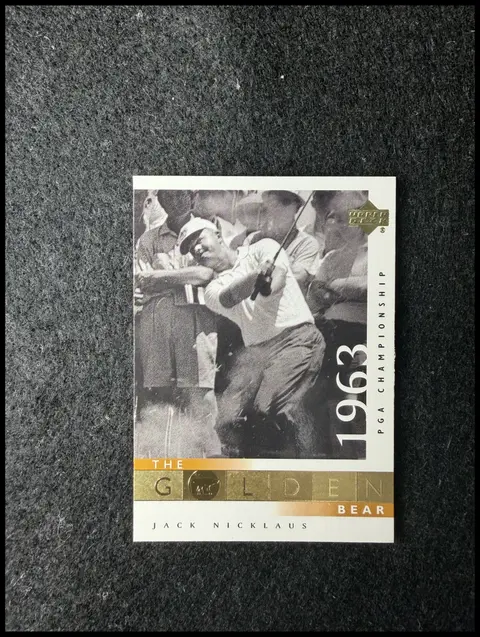
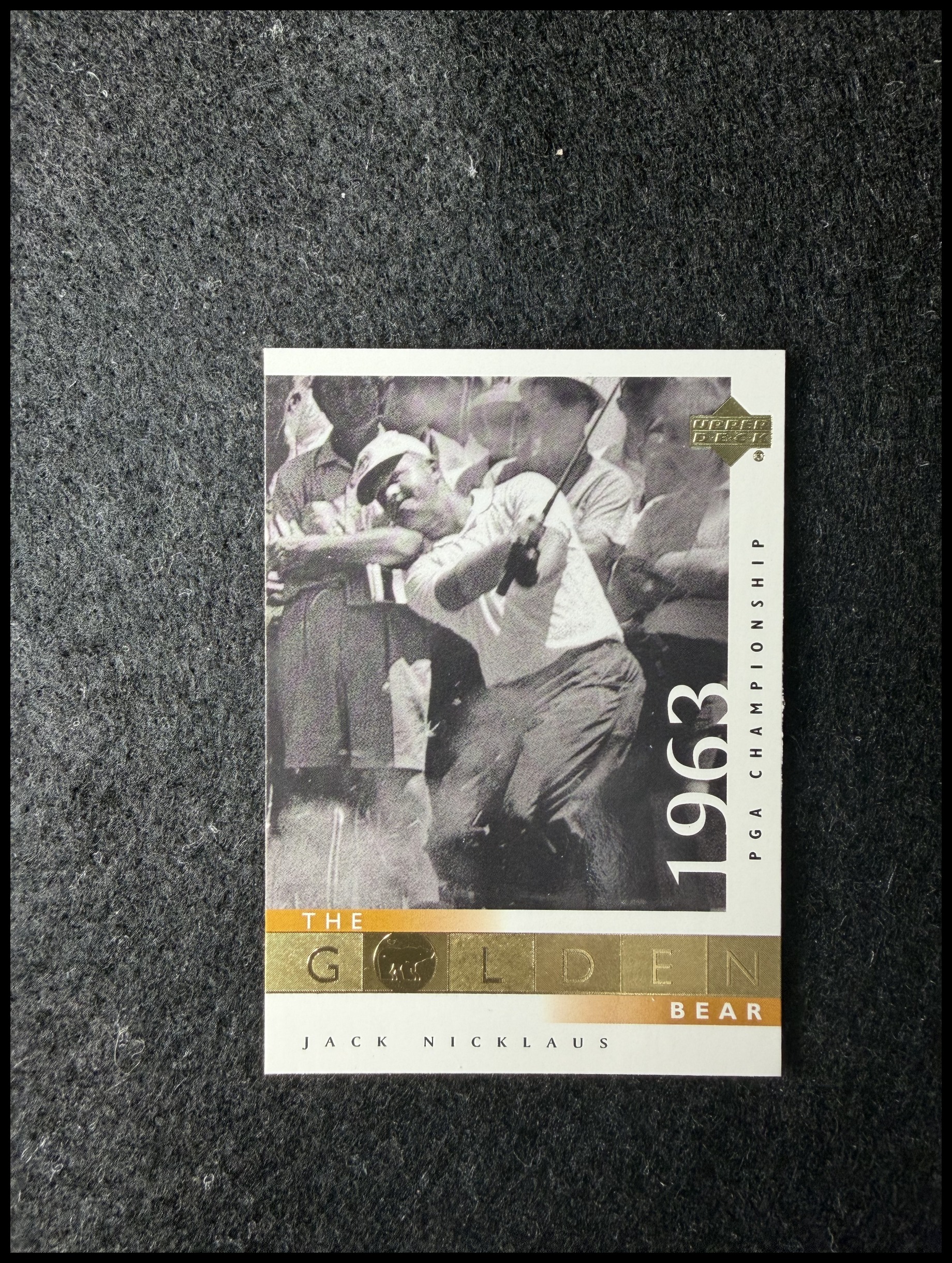
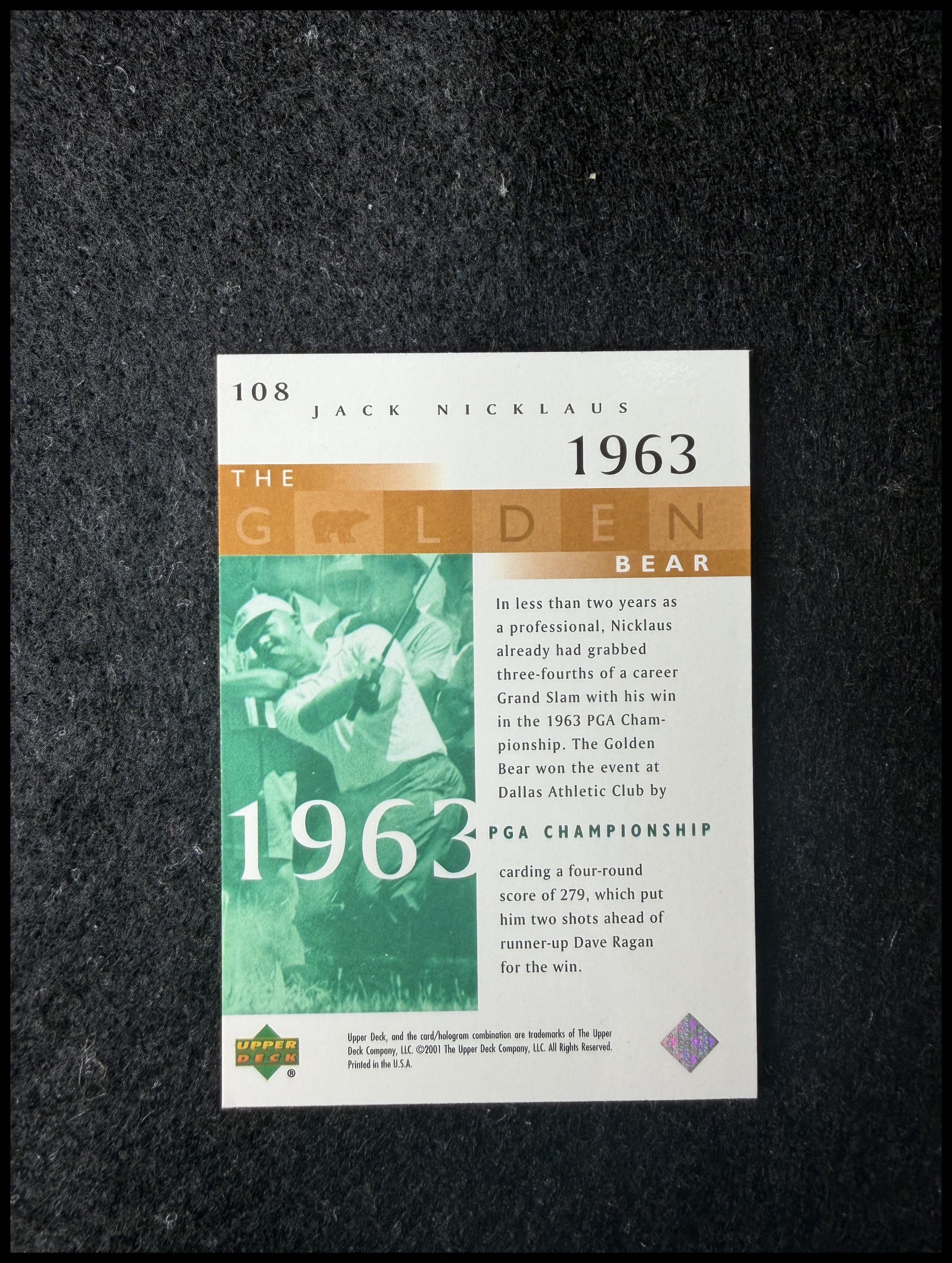
First released in the 2001 Upper Deck Golf set, with card #108 appearing in the base checklist as 'Jack Nicklaus – 1963 PGA Championship.' The set was issued by Upper Deck in 2001 and was distributed through hobby and retail channels as part of that year's golf card release.[3][6]
- Card #108 is a base card in the 2001 Upper Deck Golf checklist, not a rookie card.[2][3]
- Beckett's checklist identifies #108 specifically as 'Jack Nicklaus – 1963 PGA Championship,' indicating the card is part of a historical highlight theme rather than a generic player portrait.[3][6]
- Current market guides show the card is inexpensive raw but meaningfully more valuable in high grade, with graded 10 pricing listed around $49.28 and graded 10 at $64.00.[2]
Rarity and print run
- Tier
- Common
- Print run
- Very High
- First printed in
- 2001 Upper Deck Golf
- Demand
- Medium
- Supply
- High
- It is a base card from a mainstream Upper Deck golf release rather than a parallel, autograph, insert, or serial-numbered card.[2][3]
- The player is iconic, which supports demand, but the issue itself is not scarce.[2]
- High-grade examples are less common than raw copies, creating a condition scarcity premium rather than true print scarcity.[2]
Collector notes
Condition. Because this is a base-era Upper Deck golf card, condition is the main driver of value. Check for sharp corners, clean edges, centered borders, surface scratches, print dots, and any whitening or chipping from pack handling. Gloss-related scuffs and slight corner wear are common, and centering can matter more in high-grade submissions.
Storage. Store in a penny sleeve and rigid top loader or semi-rigid holder, and keep it in a cool, dry environment away from sunlight and humidity. If grading is planned, avoid touching the surface and keep the card flat to reduce edge wear.
Authenticity. This card is generally straightforward to authenticate because it is a mass-produced base card from a major manufacturer and does not have known serial-numbered security features. Verify the exact card number, stock, and print quality against known examples; suspicious copies usually show poor print resolution, incorrect gloss, or sizing differences. Reprints are not commonly documented for this specific card, so most concerns are condition and misidentification rather than sophisticated counterfeits.
Sources: etsy.com, sportscardspro.com, beckett.com, collectibles.com, psacard.com