Market outlook
Rising Outlook 8/10
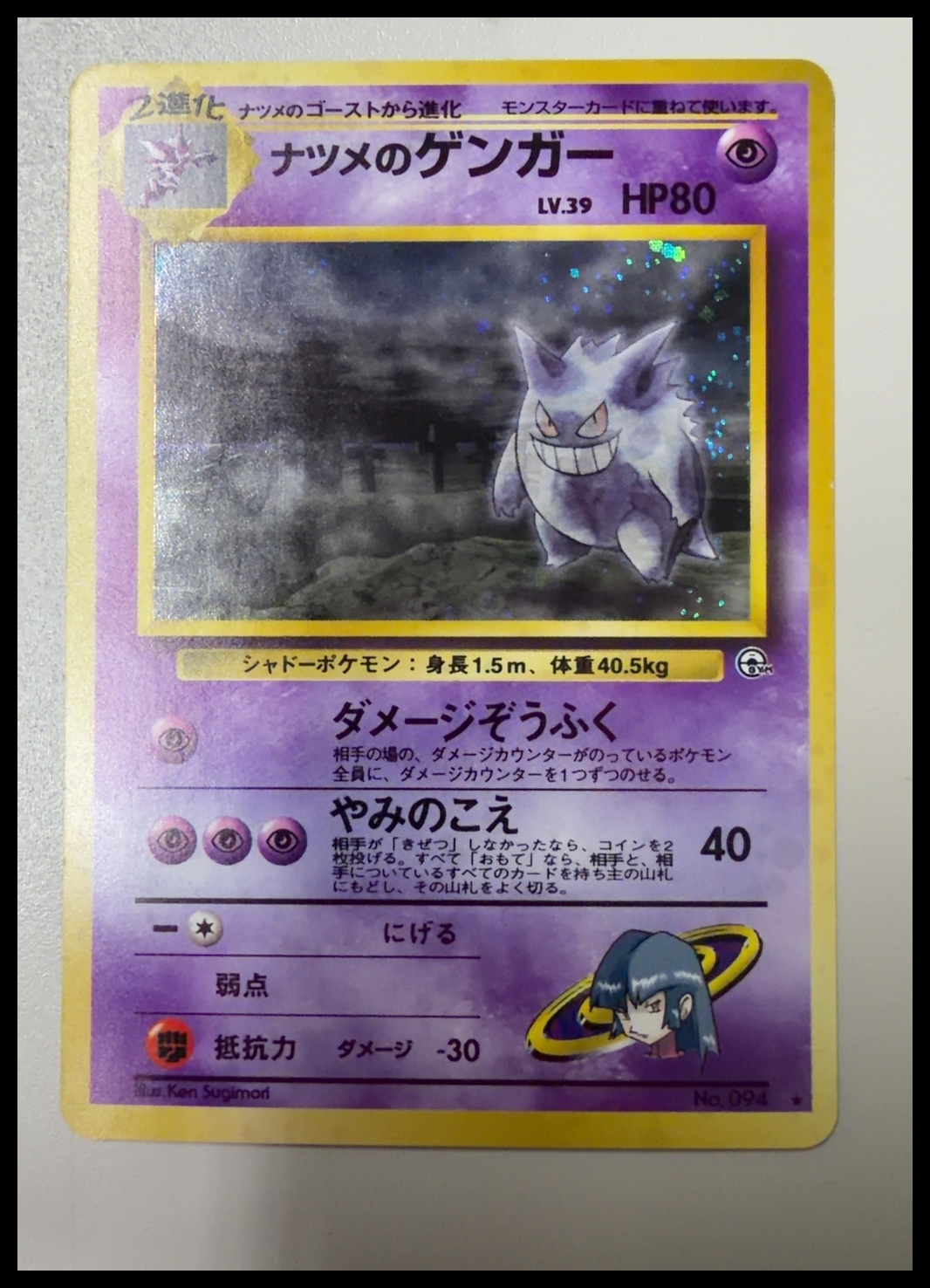
Vintage Japanese holos featuring iconic Gen 1 Pokémon and Gym Leaders have remained durable collector targets, and Sabrina's Gengar benefits from both mainstream Gengar popularity and a memorable censored-artwork story. High-grade examples are especially supported by nostalgia-driven demand and relatively limited population in strong condition.
Next months. Likely to remain firm to slightly higher, with best-condition and graded/graded/graded high grades outperforming lower grades.
Long term. Likely to continue appreciating gradually, especially for gem-mint and strong eye-appeal copies, unless broader vintage Pokémon demand weakens materially.
History
Gengar is a classic first-generation Ghost/Poison Pokémon from the original Pokémon franchise, known for its mischievous, shadowy nature and strong association with hauntings and illusions. Sabrina is the Psychic-type Gym Leader from Saffron City in the Pokémon games and anime, and this card is one of the Japanese Trainer's Pokémon cards that ties a specific Gym Leader to one of her signature Pokémon. In Japanese, the card name is ナツメのゲンガー (Natsume's Gangar).
First released in Japan on June 25, 1999 in Gym Expansion 2: Challenge from the Darkness (also called Gym Booster 2 / Gym 2), card number 094, as a Holo Rare Psychic-type Pokémon card illustrated by Ken Sugimori.
- The Japanese artwork shows Gengar in a graveyard scene with tombstones and crosses visible, which is one reason the artwork became notable among collectors.
- The card's artwork was changed for the English-language release because the original scene was considered too graphic for the U.S. market.
- It is one of the most recognizable Japanese 'Trainer's Pokémon' cards from the Gym era and is strongly associated with the Sabrina character.
Rarity and print run
- Tier
- Rare
- Print run
- Medium
- First printed in
- Gym Expansion 2: Challenge from the Darkness
- Demand
- High
- Supply
- Low
- Holo rare from an older Japanese Gym set with surviving high-grade copies limited by surface scratching and edge wear
- Character-specific demand from both Gengar collectors and Sabrina/Trainer's Pokémon collectors
- Notable artwork difference from the English release increases collector interest
- Vintage Japanese holo condition sensitivity reduces the effective supply of top-grade copies
Collector notes
Condition. Check for holo scratching, edge whitening, corner wear, surface dents, print lines, centering, and binder indentation; the dark holo background makes scratches and edge wear especially visible. Japanese WotC-era holos often also show faint silvering or edge chipping from play and storage.
Storage. Store in a clean penny sleeve plus semi-rigid holder or top loader, keep away from humidity and direct sunlight, and avoid friction against other holo cards. For graded-value copies, minimize handling and use archival-quality storage materials.
Authenticity. Verify the Japanese card text, set symbol, card number 094, and Ken Sugimori artwork details; authentic copies should have crisp print quality and correct Japanese font spacing. Watch for washed-out holo patterns, incorrect color balance, poor cut quality, or suspiciously glossy/non-period-accurate surfaces that can indicate fakes or altered reprints.
Sources: note.com, comics.ha.com, pristineauction.com, youtube.com, pkmncards.com