Market outlook
Rising Outlook 7/10
Top-name Hall of Famers with strong nostalgia often appreciate gradually over time, and this card’s high-grade market has shown active upward movement in tracked sales and price guides.[1][2][5]
Next months. Expect relatively stable pricing in raw and mid-grade copies, with continued volatility and occasional upward moves in gem-mint examples.
Long term. Over 1-3 years, high-grade copies should remain firm or trend upward modestly if demand for iconic 1970s Hall of Fame cards stays strong.
History
Nolan Ryan is one of the most iconic pitchers in baseball history, known as the all-time strikeout leader and a hard-throwing, durable ace whose career spanned from 1966 to 1993. By 1978, he was already a major star and a proven premium name among collectors, which helps explain the enduring demand for his late-1970s Topps issues.
First released as part of the 1978 Topps Baseball set, distributed through wax packs and hobby/retail channels in the United States during the 1978 baseball card season.
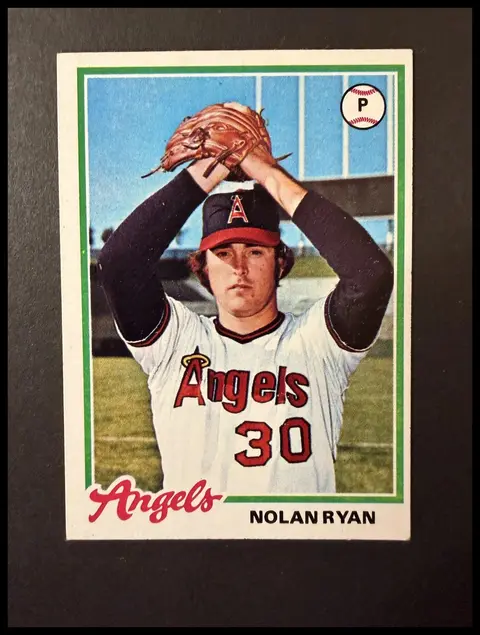
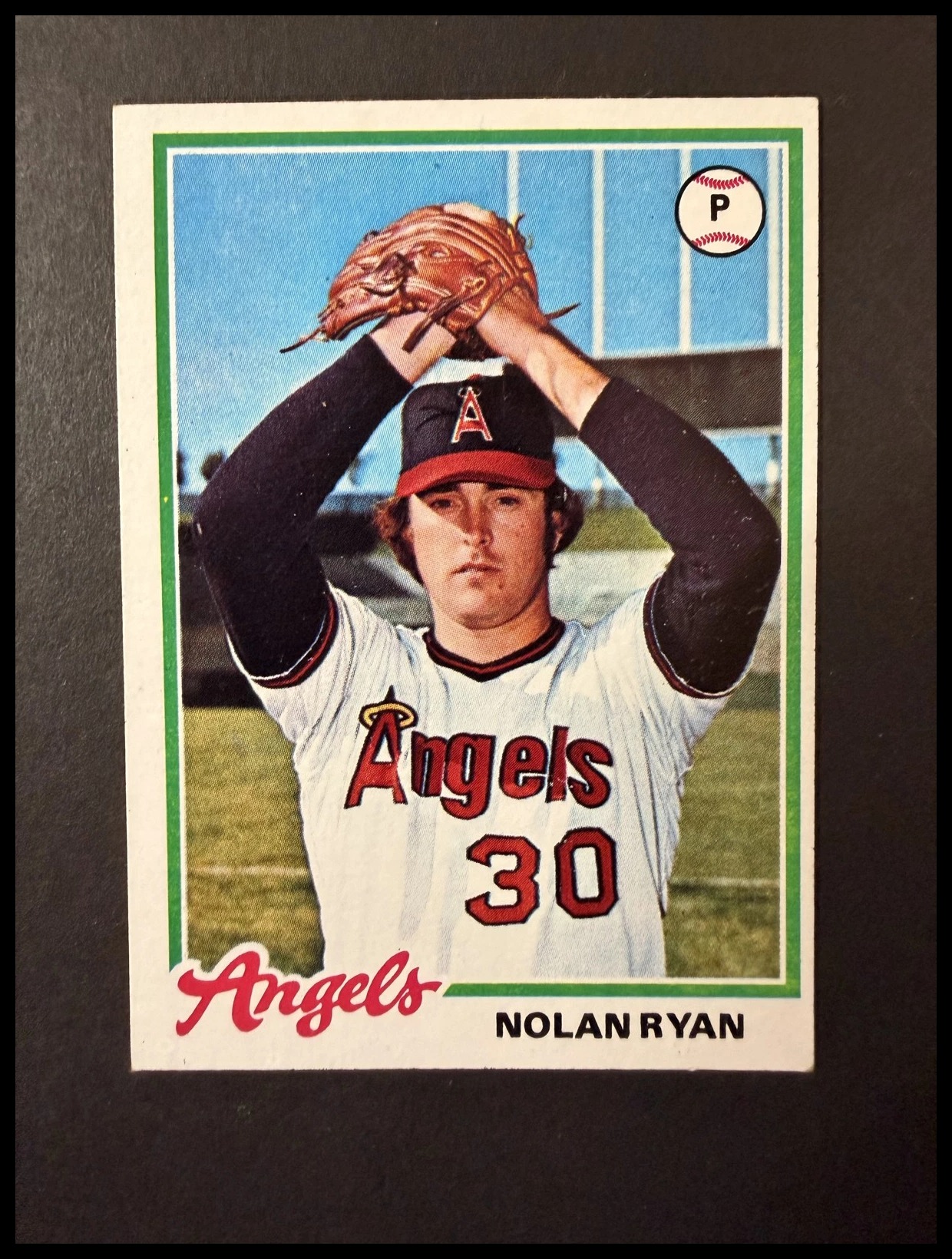
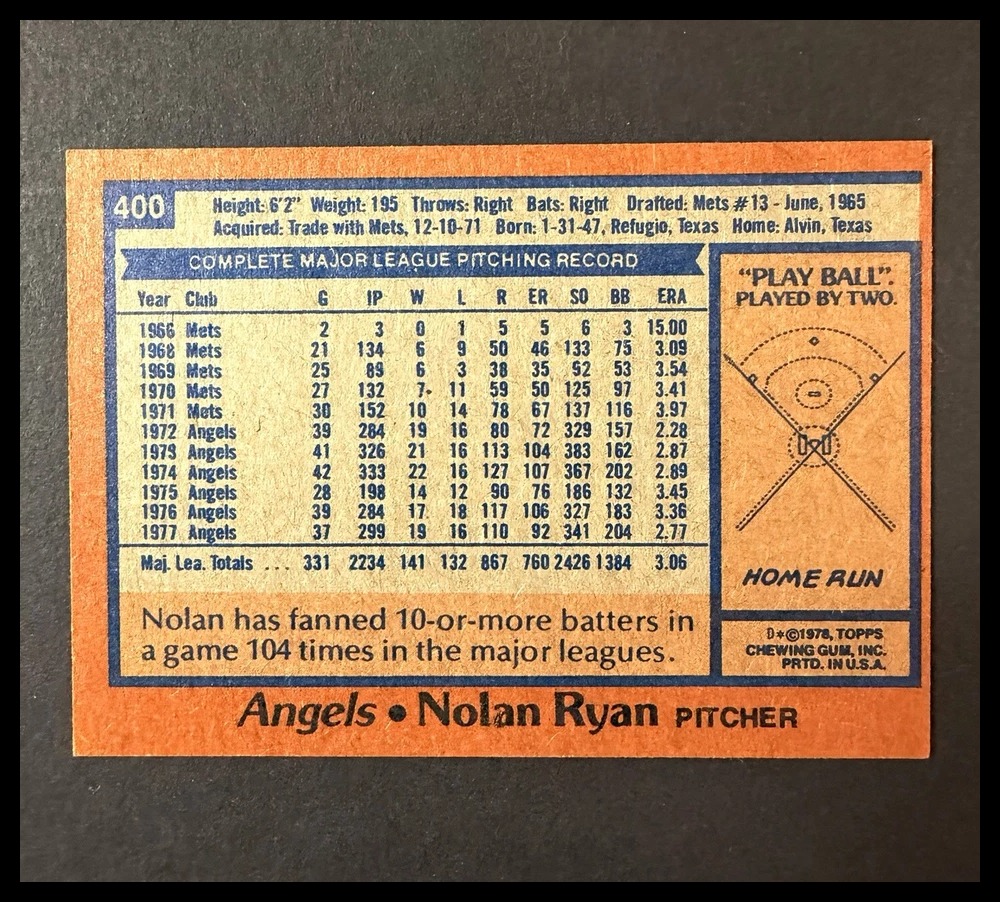
- This is the standard 1978 Topps Nolan Ryan card, card number 400 in the set.
- Market data shows strong collector demand for high-grade copies, with graded 9 examples reported at last sale around $4,150 and price-guide references ranging from about $6,000 to $14,899 depending on market source and timing.[1][2][5]
- Sports Card Investor and other market trackers indicate active price movement in both graded 8 and graded 9 grades, reflecting sustained interest rather than a static common-card market.[1][2]
Rarity and print run
- Tier
- Common
- Print run
- Very High
- First printed in
- 1978 Topps Baseball
- Demand
- High
- Supply
- High
- Base card from a very large 1978 Topps production run
- Long-term survival is high because it is a common-era baseball card
- Scarcity is mostly grade-based, not print-run-based
Collector notes
Condition. Check centering first, since 1970s Topps cards are often centered poorly. Also inspect corners for whitening, surface scratches, print dots, edge wear, and any wax stain or gum-related damage from pack storage.
Storage. Store in a penny sleeve and semi-rigid holder or top-loader, keep in a cool dry environment, and avoid direct sunlight, humidity, and repeated handling. For higher-grade copies, use archival supplies and consider third-party grading if the card is clean and well-centered.
Authenticity. Authentic 1978 Topps cards should show the characteristic vintage card stock, aging patterns, and printing traits of the era. Be cautious of overly bright surfaces, modern paper feel, or suspiciously sharp edges on a card claiming high grade; compare the font, photo placement, and back stock with verified examples.
Sources: sportscardinvestor.com, cardladder.com, sportscardspro.com, app.collectors.com, blog.unopenedpacks.com