Market outlook
Rising Outlook 7/10
Graded copies show significant price increases due to collector interest in historical cards, while ungraded copies remain stable but affordable[2][3].
Next months. Next 3-6 months: Graded copies expected to rise 10-20%, ungraded copies remain stable at $1-5
Long term. 1-3 years: Graded copies may double in value, ungraded copies stay flat due to high supply
History
Pikachu is the iconic mascot of the Pokémon franchise, created by Satoshi Tajiri and Ken Sugimori for Nintendo's Game Boy game Pokémon Red and Green in 1996. As a Electric-type Pokémon, it represents loyalty, friendship, and adventure, becoming the central character of the anime series and the most recognizable symbol of Pokémon globally[1][2].
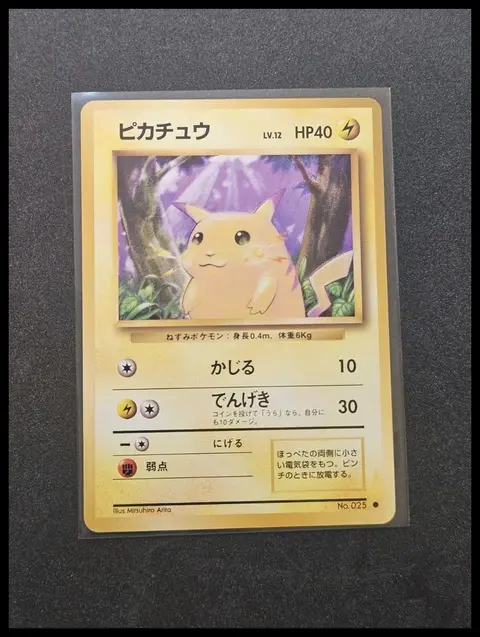
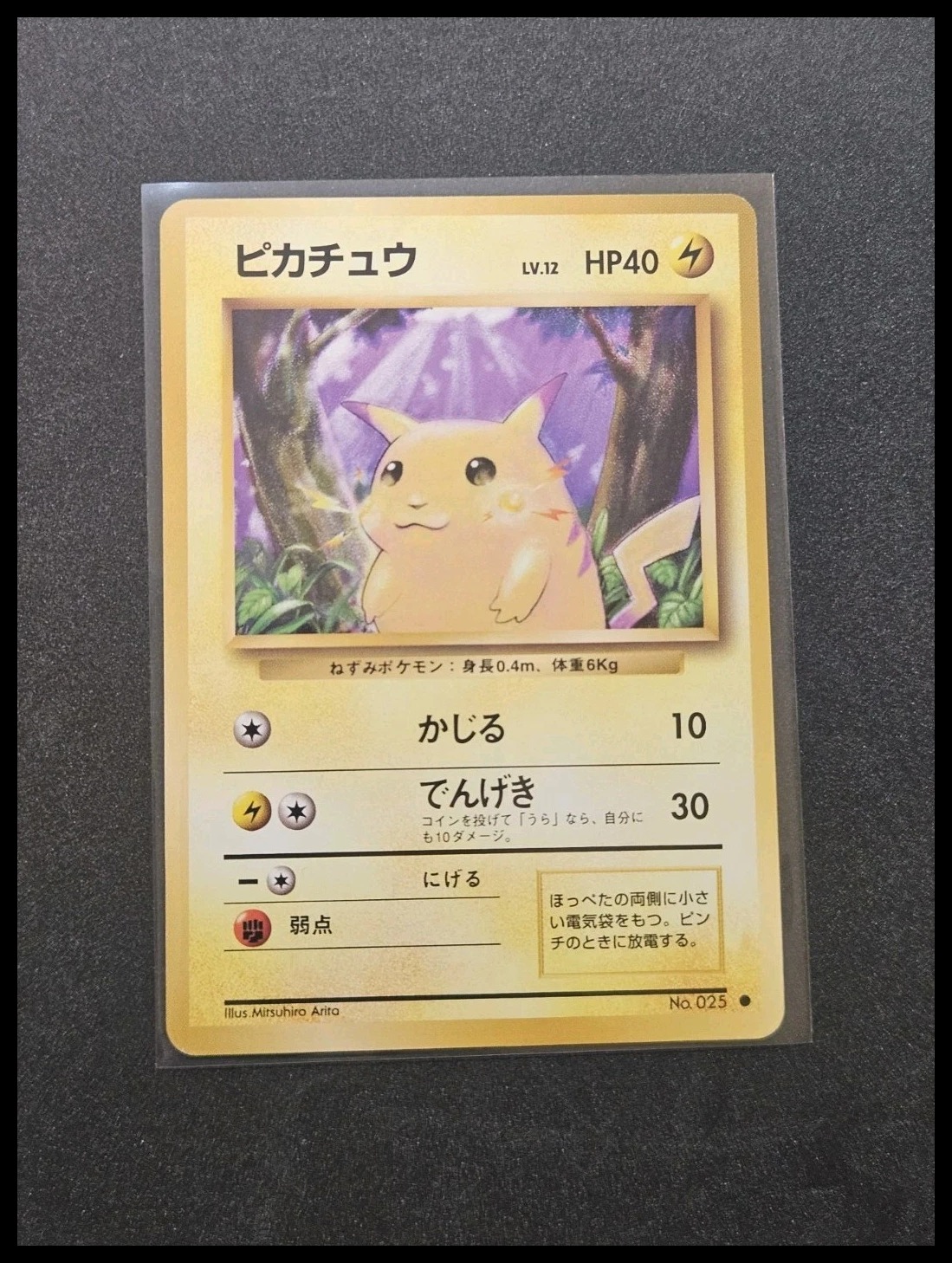
This card was first released in October 20, 1996, as part of the inaugural Japanese Pokémon Trading Card Game set, the Expansion Pack (Japanese: 拡張パック), marking the birth of the Pokémon TCG[6][8].
- First printed in the very first Japanese Pokémon TCG set, making it a foundational card of the franchise[6].
- Pikachu is the only Pokémon with the-species name 'Electric Mouse' and serves as the franchise's global mascot[1][2].
- In its original Japanese release, it has 40 HP and the Lightning type, differing from later English versions[5].
Rarity and print run
- Tier
- Common
- Print run
- Very High
- First printed in
- Expansion Pack (Japanese 拡張パック)
- Demand
- High
- Supply
- Abundant
- Originally a common card in the first Japanese set, making it widely available
- Reprinted in over 12 different sets globally, increasing supply
- High availability of ungraded copies keeps prices low, but graded copies are more scarce
Collector notes
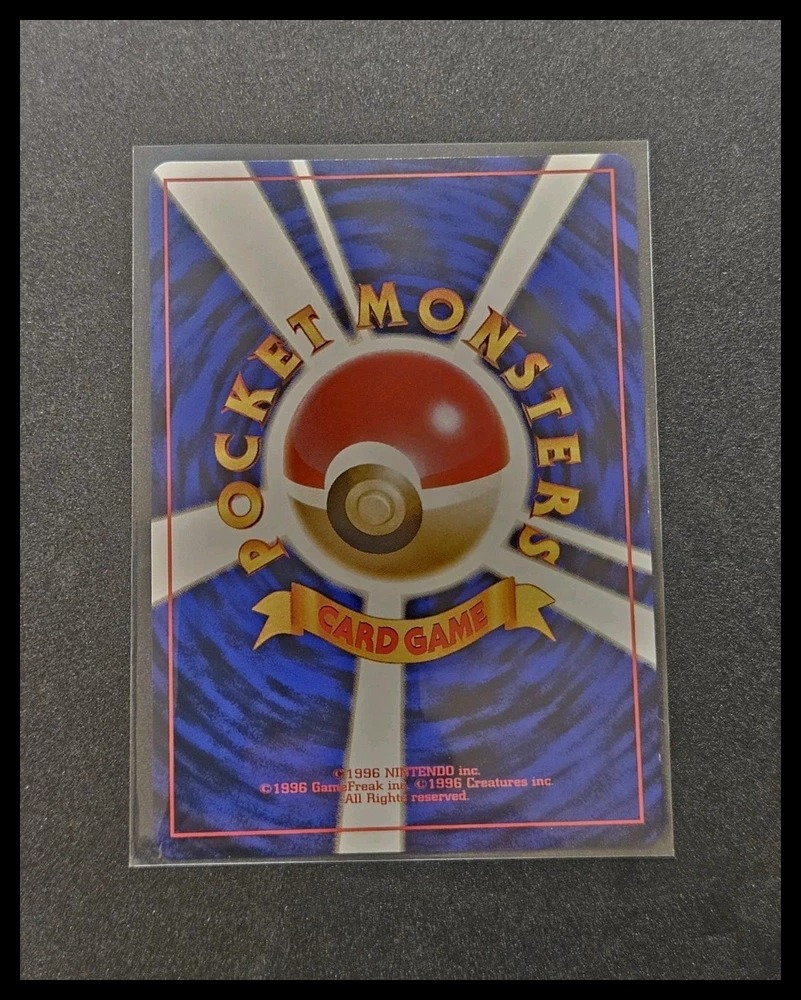
Condition. Key flaws include centering errors, corner wear, edge whitening, and surface scratches. The original Japanese card has a matte finish and is prone to bending; check for creases and print defects[1][5].
Storage. Store in a rigid上半 sleeve with a top loader, kept in a cool, dry place away from direct sunlight. Use acid-free bags and avoid humidity to prevent bending or discoloration[1][5].
Authenticity. Fakes often have brighter colors, incorrect fonts, or glossy finishes instead of the original matte. Verify the card number (#025), HP (40), and type (Lightning) match the original Japanese print. Authentic cards have a specific texture and slight off-centering known in the era[4][5].
Sources: cardmarket.com, reddit.com, sportscardinvestor.com, pricecharting.com, tcgplayer.com