Market outlook
Stable Outlook 3/10
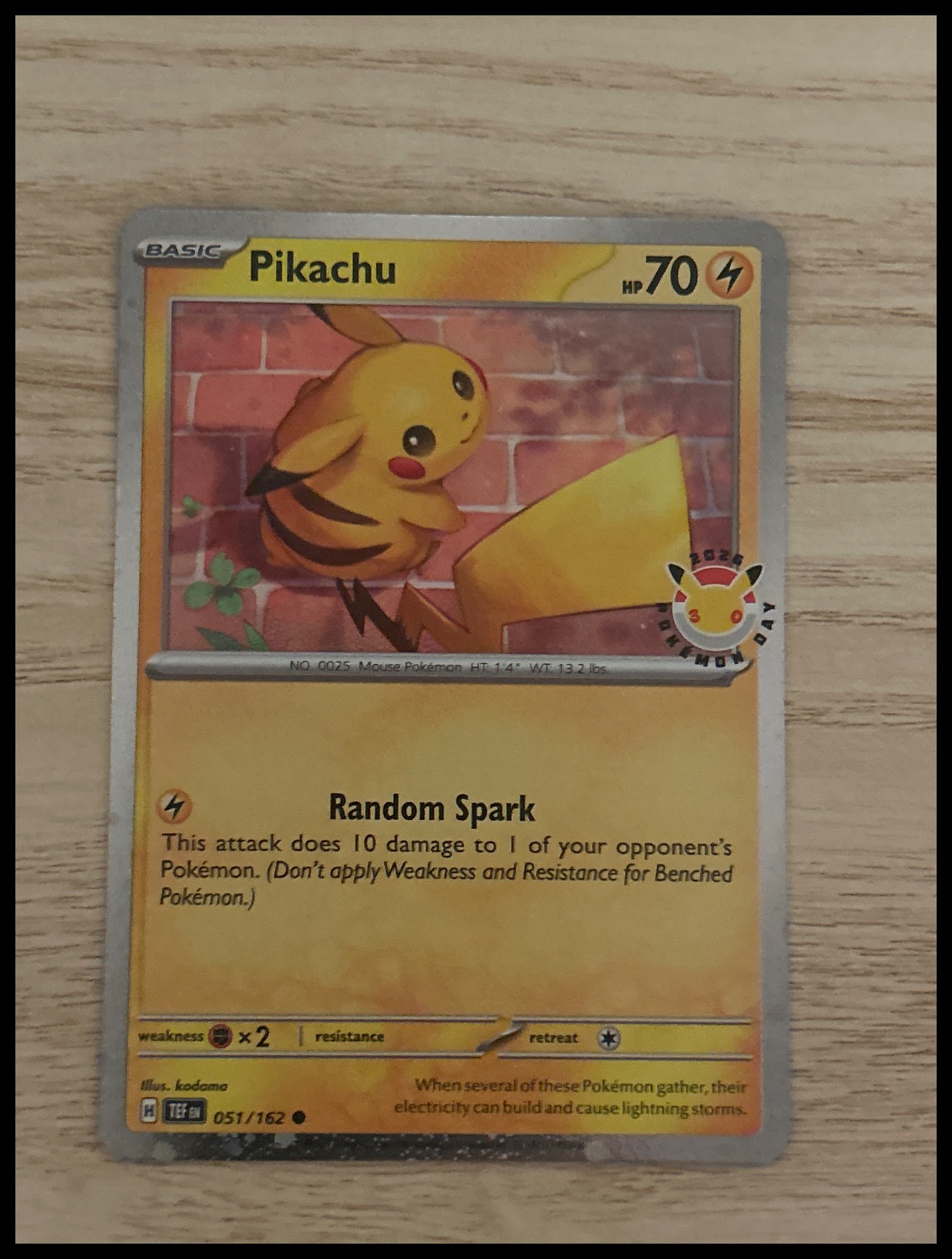
Low intrinsic value as a common card in a widely available 2024 set with steady low-volume sales around $1-2 ungraded.
Next months. Stable at $1-3 ungraded; graded holds minor premium
Long term. Minimal growth; remains bulk common unless set gains cult status
History
Pikachu is the iconic mascot of the Pokémon franchise, first introduced in 1996 as Pokémon #25 in the original games Pokémon Red and Green. As an Electric-type mouse Pokémon, it is Ash Ketchum's signature partner in the anime, symbolizing friendship, determination, and cuteness, making it the most recognizable Pokémon worldwide with immense cultural significance.
First printed in the Pokémon Base Set in 1999 in the English TCG, with Pikachu appearing in nearly every subsequent expansion due to its popularity.
- Pikachu has over 100 different card printings across Pokémon TCG history.
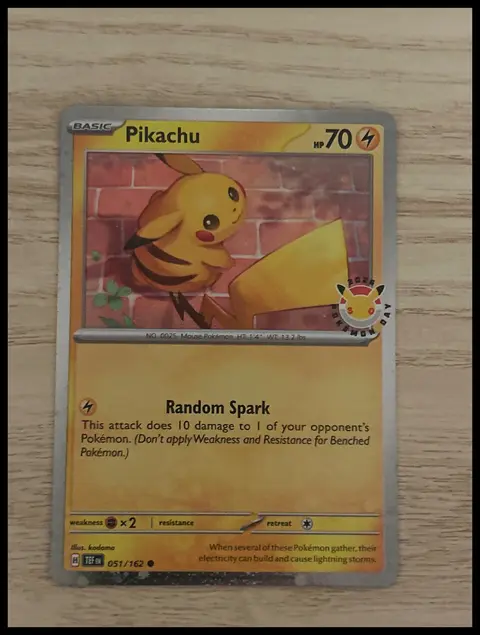
- This Temporal Forces version features a basic Lightning-type attack 'Random Spark' doing 10 damage to 1 of your opponent's Pokémon.
- Pikachu cards have driven major market trends, especially promo and rare variants.
Rarity and print run
- Tier
- Common
- Print run
- Very High
- First printed in
- Base Set (1999)
- Demand
- Medium
- Supply
- Abundant
- Standard common pull rate in packs (1 in ~3-5 commons)
- Mass-produced Scarlet & Violet expansion
- No special art, full art, or promo status
Collector notes
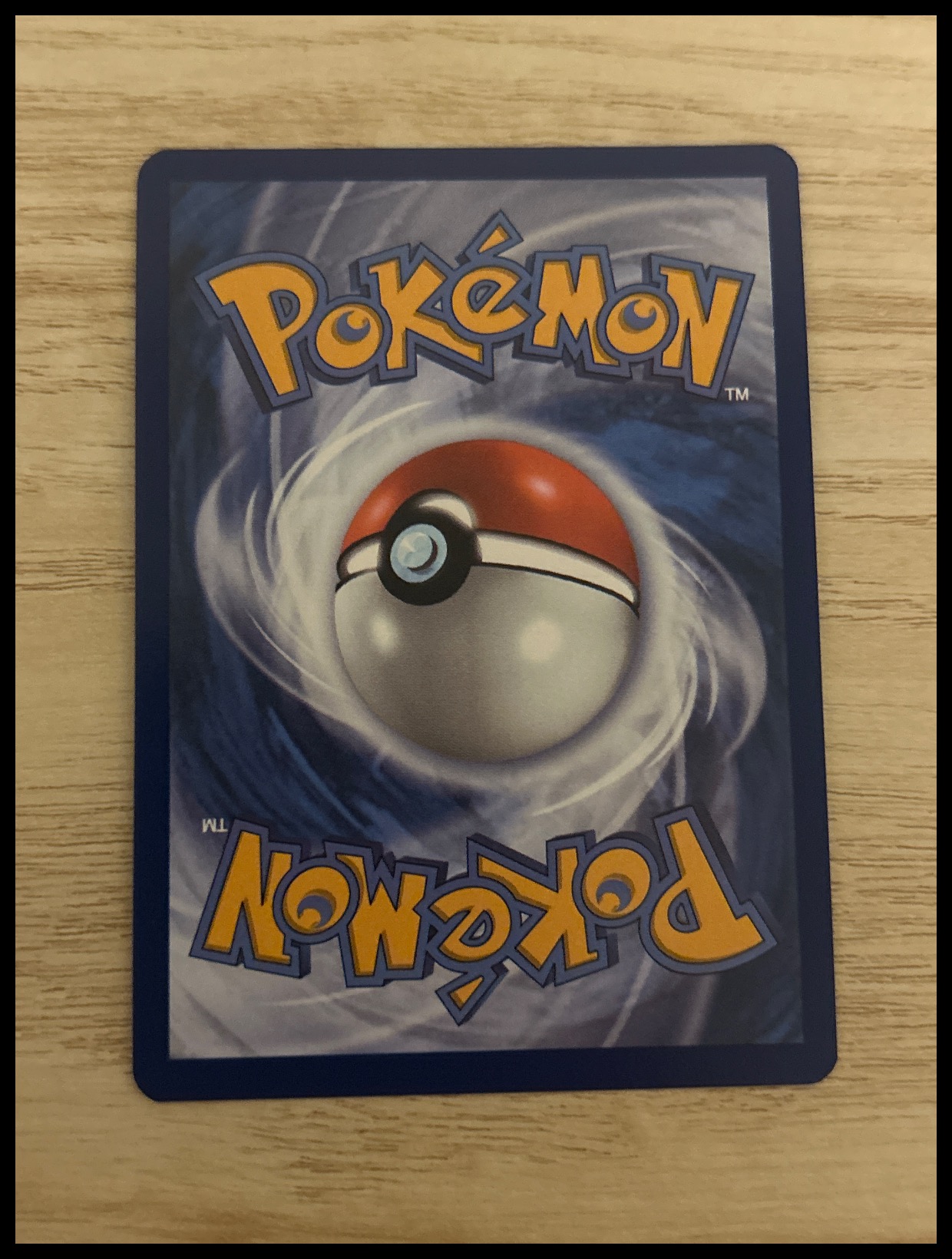
Condition. Check for centering on front and back (aim for 50/50 or better), sharp corners free of dings or whitening, clean edges without chipping, and pristine surface without scratches, print defects, or holo-foil scratches; common flaws include edge wear from shuffling and surface scratches on reverse holos.
Storage. Store in penny sleeves inside rigid top-loaders or magnetic holders; keep in cool, dry, dark places away from sunlight and humidity; use semi-rigid or hard cases for graded slabs; avoid stacking unsleeved cards.
Authenticity. Verify holo pattern consistency and font alignment matching official scans from Pokémon TCG database; check card weight and thickness (genuine ~1.8g); inspect for blurry printing or off-color inks; use blacklight for UV-reactive elements on holos; cross-reference with TCGPlayer or official sites; professional grading by graded/graded/graded confirms authenticity.